

-
Sürdürülebilirlik Raporları
-
Stratejik Planlar ve Faaliyet Raporları
-
Sürdürülebilir Kalkınma Amaçları (SKA) Faaliyetleri
-
No poverty Contents
-
Zero hunger Contents
-
2.2.1 Campus food waste tracking
-
2.3.1 Student food insecurity and hunger
-
2.3.2 Students and staff hunger interventions
-
2.3.3 Sustainable food choices on campus
-
2.3.4 Healthy and affordable food choices
-
2.5.1 Access to food security knowledge
-
2.5.2 Events for local farmers and food producers
-
2.5.3 University access to local farmers and food producers
-
2.5.4 Sustainable food purchases
-
-
Good health and wellbeing Contents
-
Quality education Contents
-
Gender equality Contents
-
5.3.1 Tracking access measures
-
5.3.2 Policy for women applications and entry
-
5.3.3 Women's access schemes
-
5.3.4 Women's application in underrepresented subjects
-
5.6.1 Policy of non-discrimination against women
-
5.6.2 Non-discrimination policies for transgender
-
5.6.3 Maternity and paternity policies
-
5.6.4 Childcare facilities for students
-
5.6.5 Childcare facilities for staff and faculty
-
5.6.6 Women's mentoring schemes
-
5.6.7 Track women's graduation rate
-
5.6.8 Policies protecting those reporting discrimination
-
-
Clean water and sanitation Contents
-
6.2.1 Water consumption tracking
-
6.3.1 Waste water treatment
-
6.3.2 Preventing water system pollution
-
6.3.3 Free drinking water provided
-
6.3.4 Water-conscious building standards
-
6.3.5 Water-conscious planting
-
6.4.1 Water reuse policy
-
6.5.1 Water management educational opportunities
-
6.5.2 Promoting conscious water usage
-
6.5.3 Off-campus water conservation support
-
6.5.4 Sustainable water extraction on campus
-
6.5.5 Cooperation on water security
-
6.5.6 Encouraging Conscious Water Use
-
6.5.7 Promoting Conscious Water Use in Communities
-
6.4.2 Water reuse measurement
-
-
Affordable and clean energy Contents
-
7.2.1 Energy-efficient renovation and building
-
7.2.2 Upgrade buildings to higher energy efficiency
-
7.2.3 Carbon reduction and emission reduction process
-
7.2.4 Plan to reduce energy consumption
-
7.2.5 Energy wastage identification
-
7.2.6 Divestment policy
-
7.4.1 Local community outreach for energy efficiency
-
7.4.2 100% renewable energy pledge
-
7.4.3 Energy efficiency services for industry
-
7.4.4 Policy development for clean energy technology
-
7.4.5 Assistance to low-carbon innovation
-
-
Decent work and economic growth Contents
-
8.2.1 Employment practice living wage
-
8.2.2 Employment practice unions
-
8.2.3 Employment policy on discrimination
-
8.2.4 Employment policy modern slavery
-
8.2.5 Employment practice equivalent rights outsourcing
-
8.2.6 Employment policy pay scale equity
-
8.2.7 Tracking pay scale for gender equity
-
8.2.8 Employment practice appeal process
-
-
Reduced inequalities Contents
-
10.6.1 Non-discriminatory admissions policy
-
10.6.10 Disability accommodation policy
-
10.6.11 Anti-harassment policy
-
10.6.2 Access to university track underrepresented groups applications
-
10.6.3 Access to university underrepresented groups recruit
-
10.6.4 Anti-discrimination policies
-
10.6.5 University diversity officer
-
10.6.6 Support for underrepresented groups
-
10.6.7 Accessible facilities
-
10.6.8 Disability support services
-
10.6.9 Disability access scheme
-
-
Sustainable cities and communities Contents
-
11.2.1 Public access to buildings
-
11.2.2 Public access to libraries
-
11.2.3 Public access to museums
-
11.2.4 Public access to green spaces
-
11.2.5 Arts and heritage contribution
-
11.2.6 Record and preserve cultural heritage
-
11.4.1 Sustainable practices targets
-
11.4.2 Promote sustainable commuting
-
11.4.3 Allow remote working
-
11.4.4 Affordable housing for employees
-
11.4.5 Affordable housing for students
-
11.4.6 Pedestrian priority on campus
-
11.4.7 Local authority collaboration regarding planning and development
-
11.4.8 Planning development - new build standards
-
11.4.9 Building on brownfield sites
-
-
Responsible consumption and production Contents
-
12.2.1 Ethical sourcing policy
-
12.2.3 Policy waste disposal - hazardous materials
-
12.2.4 Policy waste disposal - landfill policy
-
12.2.5 Policy for minimisation of plastic use
-
12.2.6 Policy for minimisation of disposable items
-
12.2.7 Disposable policy: extensions to services
-
12.2.8 Minimisation policies extended to suppliers
-
12.3.1 Waste tracking
-
12.4.1 Publication of sustainability report
-
-
Climate action Contents
-
13.2.1 Low-carbon energy tracking
-
13.3.1 Local education programmes on climate
-
13.3.2 Climate Action Plan, shared
-
13.3.3 Co-operative planning for climate change disasters
-
13.3.4 Inform and support government
-
13.3.5 Environmental education collaborate with NGOs
-
13.4.1 Commitment to carbon neutral university
-
13.4.2 Carbon neutral: achieve by date
-
-
Life below water Contents
-
14.2.1 Fresh-water ecosystems (community outreach)
-
14.2.2 Sustainable fisheries (community outreach)
-
14.2.3 Overfishing (community outreach)
-
14.3.1 Conservation and sustainable utilisation of the oceans (events)
-
14.3.2 Food from aquatic ecosystems (policies)
-
14.3.3 Maintain ecosystems and their biodiversity (direct work)
-
14.3.4 Technologies towards aquatic ecosystem damage prevention (direct work)
-
14.4.1 Water discharge guidelines and standards
-
14.4.2 Action plan to reducing plastic waste
-
14.4.3 Reducing marine pollution (policy)
-
14.5.1 Minimizing alteration of aquatic ecosystems (plan)
-
14.5.2 Monitoring the health of aquatic ecosystems
-
14.5.3 Programs towards good aquatic stewardship practices
-
14.5.4 Collaboration for shared aquatic ecosystems
-
14.5.5 Watershed management strategy
-
-
Life on land Contents
-
15.2.1 Events about sustainable use of land
-
15.2.2 Sustainably farmed food on campus
-
15.2.3 Maintain and extend current ecosystems' biodiversity
-
15.2.4 Educational programmes on ecosystems
-
15.2.5 Sustainable management of land for agriculture and tourism
-
15.2.6 Sustainable management of land for tourism and training
-
15.3.1 Sustainable use, conservation and restoration of land (policy)
-
15.3.2 Monitoring IUCN and other conservation species (policies)
-
15.3.3 Local biodiversity included in planning and development
-
15.3.4 Reduce the impact of alien species (policies)
-
15.3.5 Collaboration for shared land ecosystems
-
15.4.1 Water discharge guidelines and standards
-
15.4.2 Policy on plastic waste reduction
-
15.4.3 Policy on hazardous waste disposal
-
-
Peace justice and strong institutions Contents
-
16.2.1 Elected representation
-
16.2.2 Students' union
-
16.2.3 Identify and engage with local stakeholders
-
16.2.4 Participatory bodies for stakeholder engagement
-
16.2.5 University principles on corruption and bribery
-
16.2.6 Academic freedom policy
-
16.2.7 Publish financial data
-
16.3.1 Provide expert advice to government
-
16.3.2 Policy- and lawmakers outreach and education
-
16.3.3 Participation in government research
-
16.3.4 Neutral platform to discuss issues
-
-
Partnerships for the goals Contents
-
17.2.1 Relationships with NGOs and government for SDG policy
-
17.2.2 Cross sectoral dialogue about SDGs
-
17.2.3 International collaboration data gathering for SDG
-
17.2.4 Collaboration for SDG best practice
-
17.2.5 Collaboration with NGOs for SDGs
-
17.3.1 Publication of SDG report: SDG1
-
17.3.10 Publication of SDG report: SDG10
-
17.3.2 Publication of SDG report: SDG2
-
17.3.3 Publication of SDG report: SDG3
-
17.3.4 Publication of SDG report: SDG4
-
17.3.5 Publication of SDG report: SDG5
-
17.3.6 Publication of SDG report: SDG6
-
17.3.7 Publication of SDG report: SDG7
-
17.3.8 Publication of SDG report: SDG8
-
17.3.9 Publication of SDG report: SDG9
-
17.4.1 Education for SDGs commitment to meaningful education
-
17.4.2 Education for SDGs: specific courses on sustainability
-
17.4.3 Education for SDGs in the wider community
-
17.4.4 Sustainability literacy measurement
-
-
ISR Contents
-
....Does your institution have a valid tenure or promotion system that recognises interdisciplinary research within valid disciplines?
-
Does your institution provide special administrative support to interdisciplinary research teams within the applicable disciplines?
-
..Does your institution provide special physical facilities for interdisciplinary research teams within the applicable disciplines?
-
.Does your institution meet the criteria for interdisciplinary research success within the applicable disciplines?
-
Is there any feedback you would like to share about ISR?
-
-
-
Sürdürülebilir Kalkınma Amaçları (SKA) Raporları
-
Sayılarla Boğaziçi Üniversitesi
-
E-Bülten Arşivi
8.2.2 Employment practice unions
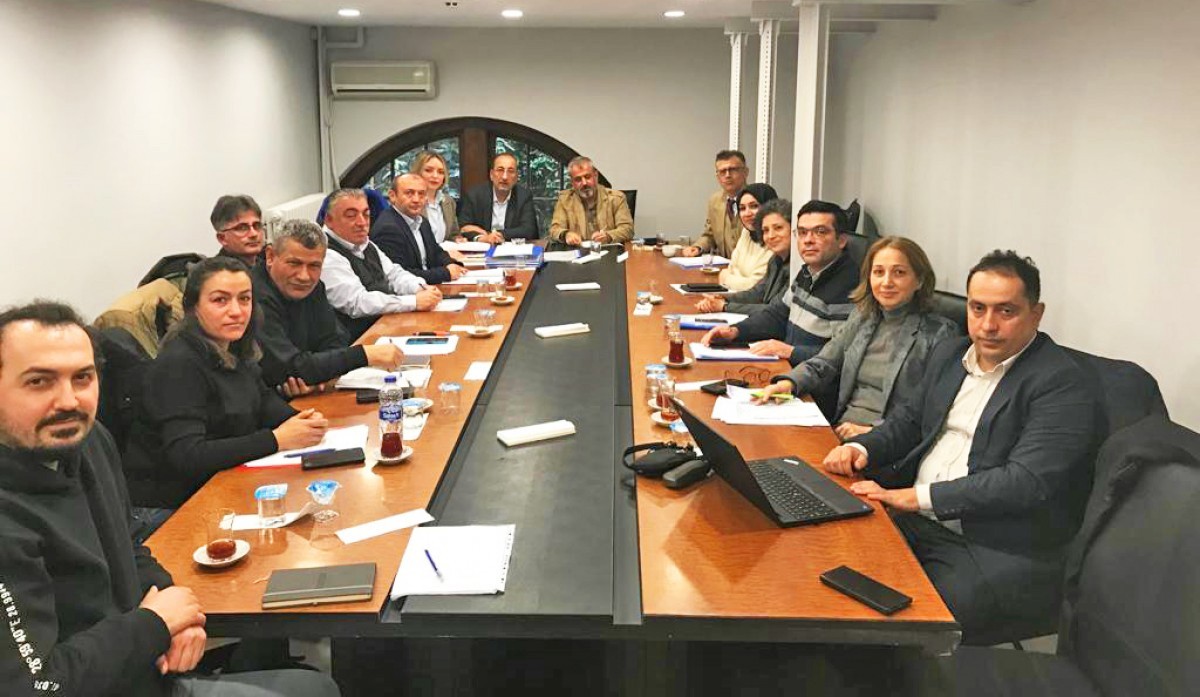
Collective Labour Agreement Agreed at Boğaziçi University Rectorate
An agreement was reached on 2 March 2023 in the collective bargaining negotiations for Boğaziçi University Rectorate and affiliated workplaces. On behalf of our union, General Secretary Hakan Bozkurt, Istanbul Branch No.5 President Selahattin Karakurt, Branch Administrative Secretary Şenel Yılmaz, Collective Labour Agreement Specialist Av. Cafer Akmaz, Özkan Akdağ, Rahmi Koca, Recep Demiray, Birgül Şahin Akmaz and Workplace Union Representatives Cafer Akmaz, Özkan Akdağ, Rahmi Koca, Recep Demiray, Birgül Şahin Akmaz participated on behalf of the Rectorate of Boğaziçi University; Deputy Secretary General Mustafa Candan, Head of Personnel Department Akkız Duman, Head of Health, Culture and Sports Department Kasım Mantarcı, Head of Strategy Development Department Zekiye Kahriman, Legal Counsellor Av. Mustafa Cem Anadolu, Account Affairs Branch Manager Meltem Ayaş, Account Affairs Branch Manager-Chef Abdullah Keskin participated on behalf of the Rectorate of Boğaziçi University. Read More
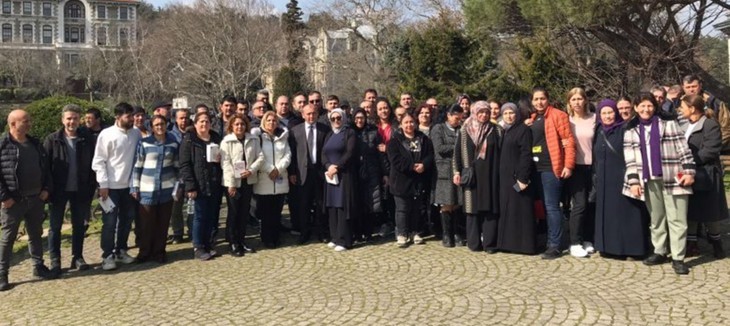
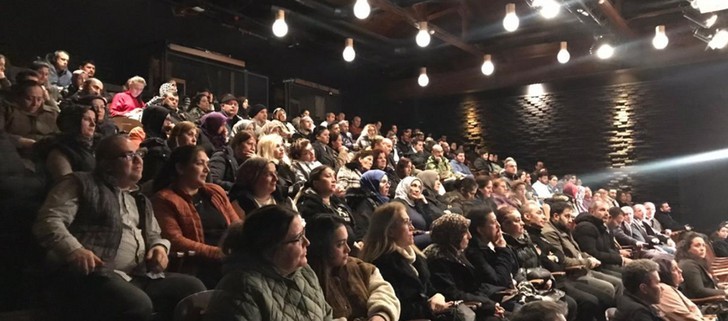
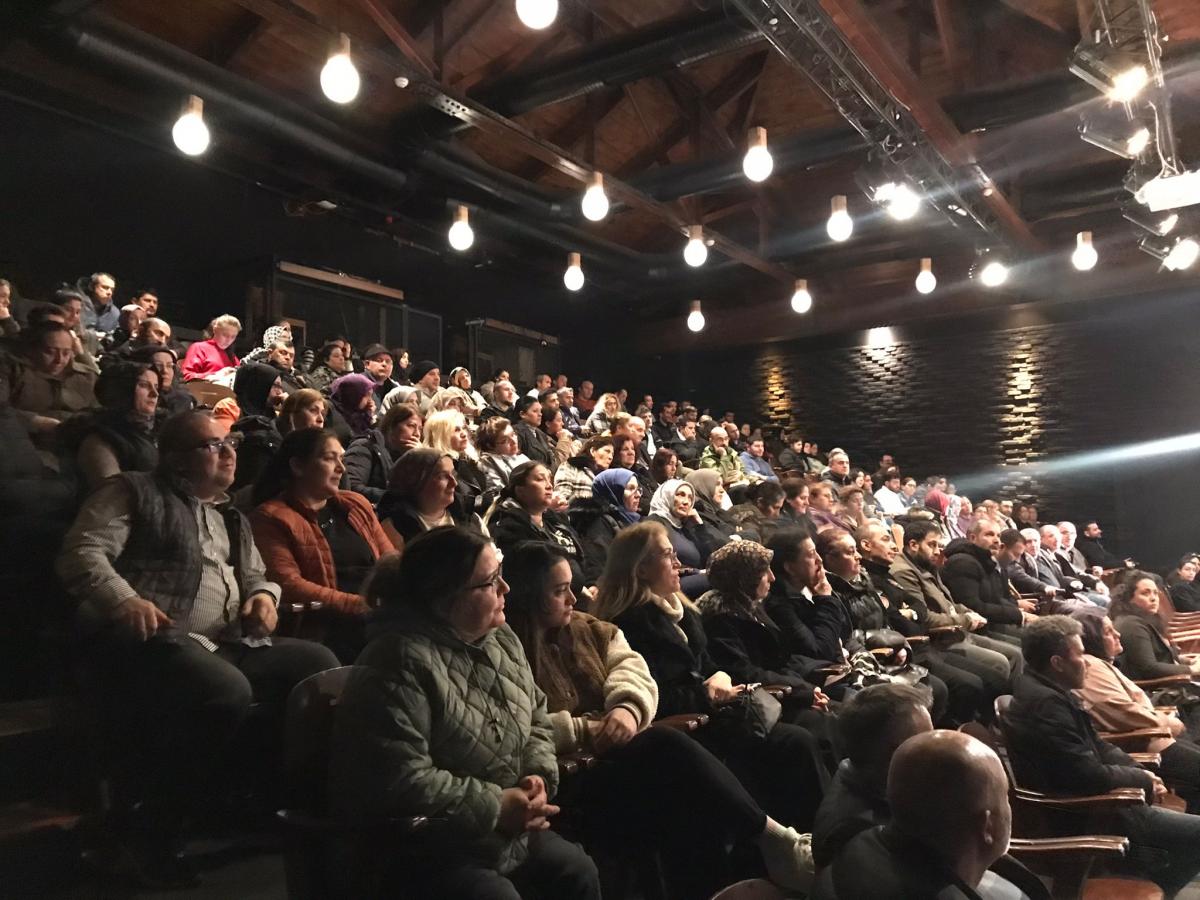
Istanbul Branch No.5 Boğaziçi University Workplace Member Information Meeting
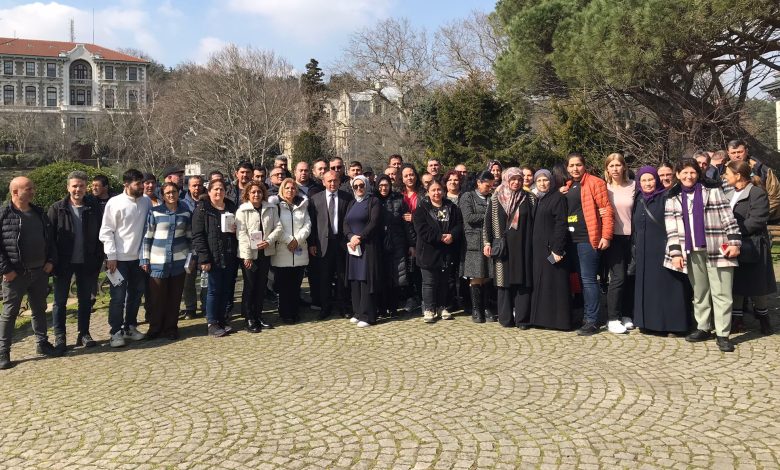
An informative meeting was held on 4 March 2024 with the participation of our workplace union representatives and members working at Boğaziçi University and affiliated workplaces organised by Istanbul No.5 Branch of our union.
Istanbul No.5 Branch President Selahattin Karakurt, Branch Administrative Secretary Şenel Yılmaz, Branch Organising Secretary Şengül Güneç, Branch Education Secretary Gülcan Sönmez and our workplace union members attended the meeting about what a union is, what a collective bargaining agreement is, how the collective bargaining process works, working conditions and workplace problems.
Boğaziçi University recognises trade unions and labour rights for all, including women and international staff. The University recognises and respects the right to organise and bargain collectively. In Turkey, the rights of public servants to form and join trade unions, their activities and collective bargaining processes are determined by the ‘Law No. 4688 on Public Servants’ Trade Unions and Collective Bargaining’. According to Article 4 of this law, ‘Trade unions are established by public servants working in public workplaces in a service branch in order to carry out activities throughout Turkey on a service branch basis.’, Article 14 (Amended: 24/6/2004-5198/1 art. According to Article 19 (Amended first paragraph: 4/4/2012-6289/14 Art.), ‘Public servants’ unions and confederations are authorised to be a party to collective bargaining negotiations within the framework of the provisions of this Law.’ Public servants working at Boğaziçi University, a state university, can benefit from the trade union rights set out in the ‘Law on Public Servants’ Trade Unions and Collective Bargaining’ numbered 4688. The trade union rights of employees with labour status are guaranteed by the ‘Law No. 6356 on Trade Unions and Collective Bargaining’. Within the scope of the law, female employees have the same trade union rights as male employees. Trade unions and confederations may engage in various activities to improve the rights and duties, working conditions, occupational safety and health conditions of public employees in line with their founding objectives, taking into account gender equality. There is no obstacle for foreign nationals working in Turkey to become trade union members.
Related Links:
Law No. 4688 on Public Servants' Trade Unions and Collective Bargaining:
https://www.mevzuat.gov.tr/MevzuatMetin/1.5.4688.pdf
Law No. 6356 on Trade Unions and Collective Labour Agreements:
https://www.mevzuat.gov.tr/mevzuatmetin/1.5.6356.pdf
Tez-Koop-Is Union Collective Labour Agreement:
https://tezkoopis.org/bogazici-universitesi-rektorlugunde-toplu-is-sozlesmesinde-anlasma-saglandi/
2024 Sustainability Report SDG-8 (Related Section)
Employee Rights and Trade Union Freedoms
Trade Union Rights of Public Officials
Public officials working at Boğaziçi University have the opportunity to exercise their trade union rights under the Law No. 4688 on Public Officials' Trade Unions and Collective Bargaining. Within the framework of this law, public servants
- They can form a trade union,
- They may become a member of a trade union appropriate to the branch of service in which they work,
- They can participate in collective bargaining negotiations as a party.
Click here for the text of the law:
https://www.mevzuat.gov.tr/MevzuatMetin/1.5.4688.pdf
Trade Union Rights of Employees with Labour Status
The trade union rights of the personnel working as labourers are guaranteed by the Law No. 6356 on Trade Unions and Collective Bargaining Agreements. This regulation covers the rights of workers to establish and join trade unions and to conclude collective labour agreements.
Click here to see the text of the law:
https://www.mevzuat.gov.tr/mevzuatmetin/1.5.6356.pdf
Equal Trade Union Rights and Participation of International Staff
All employees, both men and women, have equal trade union rights and there are no restrictions on foreign employees in Turkey to become members of trade unions. In this context, international staff working at Boğaziçi University can also benefit from trade union rights.
Gender Equality and the Role of Trade Unions
Trade unions and confederations may carry out activities aiming to improve the rights and obligations, working conditions, occupational safety and health standards of public personnel, taking into account gender equality.
Boğaziçi University's Commitment
Within this framework, Boğaziçi University respects and supports trade union rights by recognising the freedom of association and collective bargaining rights of all employees. This approach of the University towards employee rights serves the goal of creating a working environment based on the principles of transparency and equality.
Related News on the Subject
Collective Labour Agreement Signed at Boğaziçi University Rectorate
An agreement was reached on 2 March 2023 in the collective bargaining negotiations between Boğaziçi University and Tez-Koop-İş Union. Deputy Secretary General Mustafa Candan, Head of Personnel Department Akkız Duman, Head of Health, Culture and Sports Department Kasım Mantarcı, Head of Strategy Development Department Zekiye Kahriman, Legal Counsellor Av. Mustafa Cem Anadolu, Account Affairs Branch Manager Meltem Ayaş and Account Affairs Branch Manager-Chef Abdullah Keskin, and on behalf of Tez-Koop-İş Union, General Secretary Hakan Bozkurt, Istanbul Branch No.5 President Selahattin Karakurt, Branch Administrative Secretary Şenel Yılmaz, Collective Labour Agreement Specialist Av.Tülay Uzunay Javanshır and Workplace Union Representatives Cafer Akmaz, Özkan Akdağ, Rahmi Koca, Recep Demiray and Birgül Şahin Akmaz participated.
.jpg)
https://tezkoopis.org/bogazici-universitesi-rektorlugunde-toplu-is-sozlesmesinde-anlasma-saglandi/
Tez-Koop-Is Union Member Information Meeting
An informative meeting was held on 4 March 2024 with the participation of workplace union representatives and members working at Boğaziçi University and affiliated workplaces organised by Tez-Koop-İş Union Istanbul Branch No.5. Istanbul Branch No.5 President Selahattin Karakurt, Branch Administrative Secretary Şenel Yılmaz, Branch Organising Secretary Şengül Güneç, Branch Education Secretary Gülcan Sönmez and workplace union members attended the meeting where information was given on what a union is, what a collective bargaining agreement is, how the collective bargaining process works, working conditions and workplace problems.