


-
Sürdürülebilirlik Raporları
-
Sürdürülebilir Kalkınma Amaçları (SKA) Faaliyetleri
-
No poverty Contents
-
Zero hunger Contents
-
2.2.1 Campus food waste tracking
-
2.3.1 Student food insecurity and hunger
-
2.3.2 Students and staff hunger interventions
-
2.3.3 Sustainable food choices on campus
-
2.3.4 Healthy and affordable food choices
-
2.5.1 Access to food security knowledge
-
2.5.2 Events for local farmers and food producers
-
2.5.3 University access to local farmers and food producers
-
2.5.4 Sustainable food purchases
-
-
Good health and wellbeing Contents
-
Quality education Contents
-
Gender equality Contents
-
5.3.1 Tracking access measures
-
5.3.2 Policy for women applications and entry
-
5.3.3 Women's access schemes
-
5.3.4 Women's application in underrepresented subjects
-
5.6.1 Policy of non-discrimination against women
-
5.6.2 Non-discrimination policies for transgender
-
5.6.3 Maternity and paternity policies
-
5.6.4 Childcare facilities for students
-
5.6.5 Childcare facilities for staff and faculty
-
5.6.6 Women's mentoring schemes
-
5.6.7 Track women's graduation rate
-
5.6.8 Policies protecting those reporting discrimination
-
-
Clean water and sanitation Contents
-
6.2.1 Water consumption tracking
-
6.3.1 Waste water treatment
-
6.3.2 Preventing water system pollution
-
6.3.3 Free drinking water provided
-
6.3.4 Water-conscious building standards
-
6.3.5 Water-conscious planting
-
6.4.1 Water reuse policy
-
6.5.1 Water management educational opportunities
-
6.5.2 Promoting conscious water usage
-
6.5.3 Off-campus water conservation support
-
6.5.4 Sustainable water extraction on campus
-
6.5.5 Cooperation on water security
-
6.5.6 Encouraging Conscious Water Use
-
6.5.7 Promoting Conscious Water Use in Communities
-
6.4.2 Water reuse measurement
-
-
Affordable and clean energy Contents
-
7.2.1 Energy-efficient renovation and building
-
7.2.2 Upgrade buildings to higher energy efficiency
-
7.2.3 Carbon reduction and emission reduction process
-
7.2.4 Plan to reduce energy consumption
-
7.2.5 Energy wastage identification
-
7.2.6 Divestment policy
-
7.4.1 Local community outreach for energy efficiency
-
7.4.2 100% renewable energy pledge
-
7.4.3 Energy efficiency services for industry
-
7.4.4 Policy development for clean energy technology
-
7.4.5 Assistance to low-carbon innovation
-
-
Decent work and economic growth Contents
-
8.2.1 Employment practice living wage
-
8.2.2 Employment practice unions
-
8.2.3 Employment policy on discrimination
-
8.2.4 Employment policy modern slavery
-
8.2.5 Employment practice equivalent rights outsourcing
-
8.2.6 Employment policy pay scale equity
-
8.2.7 Tracking pay scale for gender equity
-
8.2.8 Employment practice appeal process
-
-
Reduced inequalities Contents
-
10.6.1 Non-discriminatory admissions policy
-
10.6.10 Disability accommodation policy
-
10.6.11 Anti-harassment policy
-
10.6.2 Access to university track underrepresented groups applications
-
10.6.3 Access to university underrepresented groups recruit
-
10.6.4 Anti-discrimination policies
-
10.6.5 University diversity officer
-
10.6.6 Support for underrepresented groups
-
10.6.7 Accessible facilities
-
10.6.8 Disability support services
-
10.6.9 Disability access scheme
-
-
Sustainable cities and communities Contents
-
11.2.1 Public access to buildings
-
11.2.2 Public access to libraries
-
11.2.3 Public access to museums
-
11.2.4 Public access to green spaces
-
11.2.5 Arts and heritage contribution
-
11.2.6 Record and preserve cultural heritage
-
11.4.1 Sustainable practices targets
-
11.4.2 Promote sustainable commuting
-
11.4.3 Allow remote working
-
11.4.4 Affordable housing for employees
-
11.4.5 Affordable housing for students
-
11.4.6 Pedestrian priority on campus
-
11.4.7 Local authority collaboration regarding planning and development
-
11.4.8 Planning development - new build standards
-
11.4.9 Building on brownfield sites
-
-
Responsible consumption and production Contents
-
12.2.1 Ethical sourcing policy
-
12.2.3 Policy waste disposal - hazardous materials
-
12.2.4 Policy waste disposal - landfill policy
-
12.2.5 Policy for minimisation of plastic use
-
12.2.6 Policy for minimisation of disposable items
-
12.2.7 Disposable policy: extensions to services
-
12.2.8 Minimisation policies extended to suppliers
-
12.3.1 Waste tracking
-
12.4.1 Publication of sustainability report
-
-
Climate action Contents
-
13.2.1 Low-carbon energy tracking
-
13.3.1 Local education programmes on climate
-
13.3.2 Climate Action Plan, shared
-
13.3.3 Co-operative planning for climate change disasters
-
13.3.4 Inform and support government
-
13.3.5 Environmental education collaborate with NGOs
-
13.4.1 Commitment to carbon neutral university
-
13.4.2 Carbon neutral: achieve by date
-
-
Life below water Contents
-
14.2.1 Fresh-water ecosystems (community outreach)
-
14.2.2 Sustainable fisheries (community outreach)
-
14.2.3 Overfishing (community outreach)
-
14.3.1 Conservation and sustainable utilisation of the oceans (events)
-
14.3.2 Food from aquatic ecosystems (policies)
-
14.3.3 Maintain ecosystems and their biodiversity (direct work)
-
14.3.4 Technologies towards aquatic ecosystem damage prevention (direct work)
-
14.4.1 Water discharge guidelines and standards
-
14.4.2 Action plan to reducing plastic waste
-
14.4.3 Reducing marine pollution (policy)
-
14.5.1 Minimizing alteration of aquatic ecosystems (plan)
-
14.5.2 Monitoring the health of aquatic ecosystems
-
14.5.3 Programs towards good aquatic stewardship practices
-
14.5.4 Collaboration for shared aquatic ecosystems
-
14.5.5 Watershed management strategy
-
-
Life on land Contents
-
15.2.1 Events about sustainable use of land
-
15.2.2 Sustainably farmed food on campus
-
15.2.3 Maintain and extend current ecosystems' biodiversity
-
15.2.4 Educational programmes on ecosystems
-
15.2.5 Sustainable management of land for agriculture and tourism
-
15.2.6 Sustainable management of land for tourism and training
-
15.3.1 Sustainable use, conservation and restoration of land (policy)
-
15.3.2 Monitoring IUCN and other conservation species (policies)
-
15.3.3 Local biodiversity included in planning and development
-
15.3.4 Reduce the impact of alien species (policies)
-
15.3.5 Collaboration for shared land ecosystems
-
15.4.1 Water discharge guidelines and standards
-
15.4.2 Policy on plastic waste reduction
-
15.4.3 Policy on hazardous waste disposal
-
-
Peace justice and strong institutions Contents
-
16.2.1 Elected representation
-
16.2.2 Students' union
-
16.2.3 Identify and engage with local stakeholders
-
16.2.4 Participatory bodies for stakeholder engagement
-
16.2.5 University principles on corruption and bribery
-
16.2.6 Academic freedom policy
-
16.2.7 Publish financial data
-
16.3.1 Provide expert advice to government
-
16.3.2 Policy- and lawmakers outreach and education
-
16.3.3 Participation in government research
-
16.3.4 Neutral platform to discuss issues
-
-
Partnerships for the goals Contents
-
17.2.1 Relationships with NGOs and government for SDG policy
-
17.2.2 Cross sectoral dialogue about SDGs
-
17.2.3 International collaboration data gathering for SDG
-
17.2.4 Collaboration for SDG best practice
-
17.2.5 Collaboration with NGOs for SDGs
-
17.3.1 Publication of SDG report: SDG1
-
17.3.10 Publication of SDG report: SDG10
-
17.3.2 Publication of SDG report: SDG2
-
17.3.3 Publication of SDG report: SDG3
-
17.3.4 Publication of SDG report: SDG4
-
17.3.5 Publication of SDG report: SDG5
-
17.3.6 Publication of SDG report: SDG6
-
17.3.7 Publication of SDG report: SDG7
-
17.3.8 Publication of SDG report: SDG8
-
17.3.9 Publication of SDG report: SDG9
-
17.4.1 Education for SDGs commitment to meaningful education
-
17.4.2 Education for SDGs: specific courses on sustainability
-
17.4.3 Education for SDGs in the wider community
-
17.4.4 Sustainability literacy measurement
-
-
ISR Contents
-
....Does your institution have a valid tenure or promotion system that recognises interdisciplinary research within valid disciplines?
-
Does your institution provide special administrative support to interdisciplinary research teams within the applicable disciplines?
-
..Does your institution provide special physical facilities for interdisciplinary research teams within the applicable disciplines?
-
.Does your institution meet the criteria for interdisciplinary research success within the applicable disciplines?
-
Is there any feedback you would like to share about ISR?
-
-
-
Sürdürülebilir Kalkınma Amaçları (SKA) Raporları
-
Sayılarla Boğaziçi Üniversitesi
-
E-Bülten Arşivi
17.2.3 International collaboration data gathering for SDG
Boğaziçi University's Collaborations on International Data Collection and Measurement for Sustainable Development Goals
WETCARB: International Collaboration on Wetland Carbon Measurement and Data Collection
Boğaziçi University leads an international research collaboration focused on gathering and measuring data relevant to the Sustainable Development Goals through its coordination of WETCARB (Wetland Ecosystem Tool for Carbon Accounting). Funded under the PRIMA Programme, the project brings together universities, research organisations and sectoral stakeholders from Türkiye, Egypt, Greece, Italy and Jordan to investigate the role of Mediterranean wetlands in the carbon cycle and climate change mitigation.
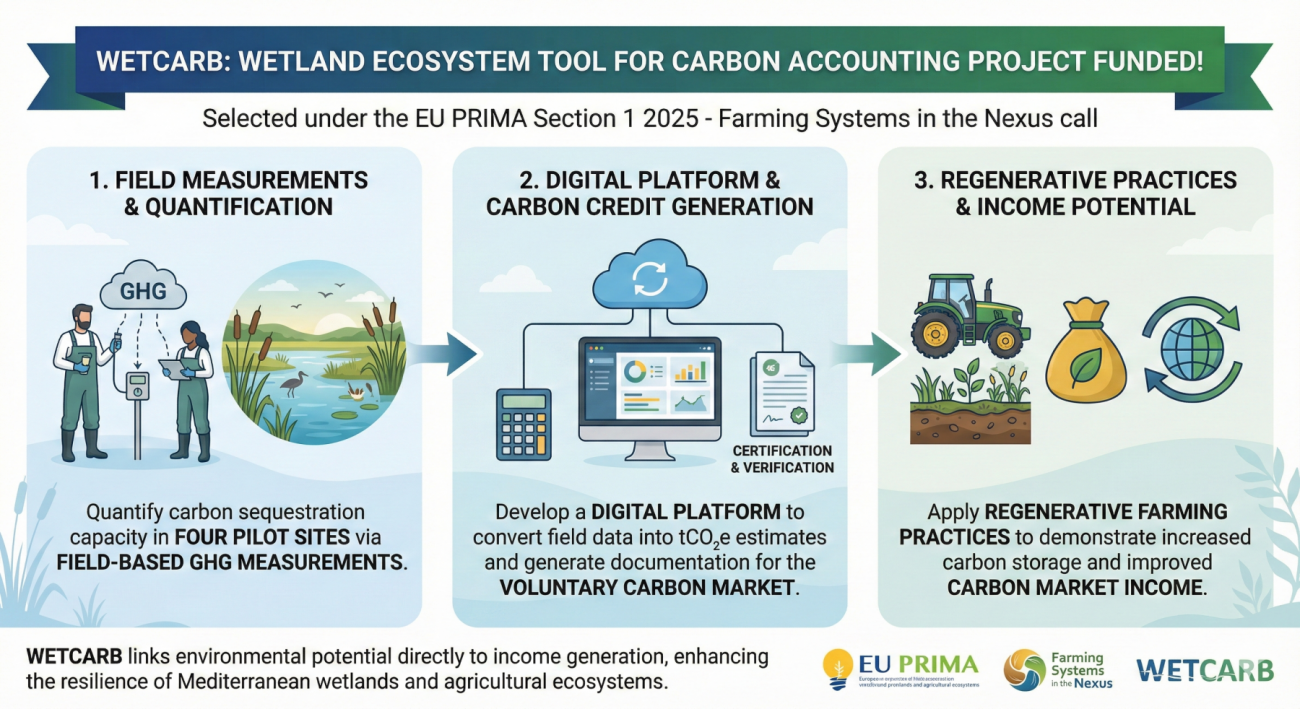
Planned field studies at Acarlar Floodplain Forest in Türkiye, Lake Burullus in Egypt, and Lakes Kerkini and Kournas in Greece will investigate carbon storage capacities, greenhouse gas emissions and ecosystem dynamics. The project will also develop a digital monitoring, reporting and verification (MRV) platform to support the scientific monitoring, assessment and reporting of wetland carbon sequestration capacities and greenhouse gas balances. Data generated through this international collaboration are intended to inform science-based strategies for wetland conservation, restoration and sustainable management. The project thereby supports the generation of data relevant particularly to SDG 13 (Climate Action) and SDG 15 (Life on Land).
The full news article is available here.
INTEGRATOR: International Collaboration on Data and Monitoring for Sustainable Water Management
The international project “INTEGRATOR: Integrated Innovation Ecosystems for Transformative Nexus Governance towards Enhanced Water Resilience”, coordinated by Boğaziçi University, has received funding under Cluster 6 of the EU’s Horizon Europe Programme, which covers food, the bioeconomy, natural resources, agriculture, and the environment. The project will bring together 18 partners from 11 countries. Boğaziçi University’s research team includes İrem Daloğlu, Nadim Copty, Raşit Bilgin and Cem İskender Aydın of the Institute of Environmental Sciences.
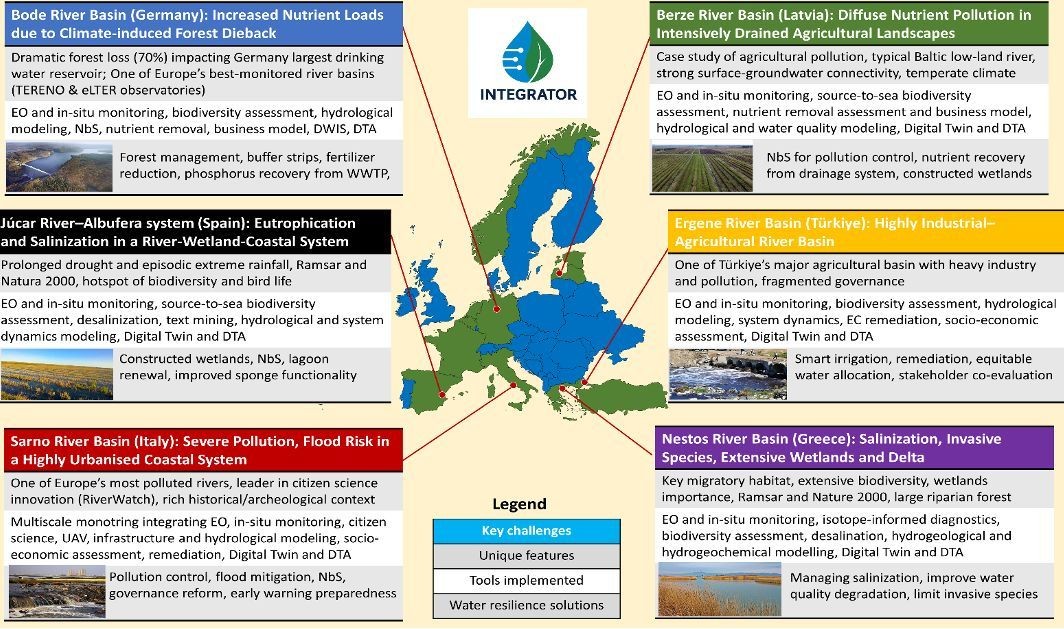
The project aims to develop a data-driven water management framework integrating multi-scale monitoring systems, digital twins and advanced modelling approaches. These activities are intended to strengthen international research collaboration on water resource monitoring and the development of management approaches informed by scientific data. The project’s monitoring and data-driven research components will support sustainable water management and climate resilience objectives associated with SDG 6 — Clean Water and Sanitation and SDG 13 — Climate Action.
The full news article is available here.
Boğaziçi University's Contribution to the Annual UN SDSN Sustainable Development Report
Through the United Nations Sustainable Development Solutions Network (UN SDSN), Boğaziçi University actively participates in international data collection and measurement efforts in line with the Sustainable Development Goals (SDGs). In this context, the Sustainable Development Report, published annually, is an important resource that reviews countries' progress towards the SDGs and provides comparative data among UN member states.
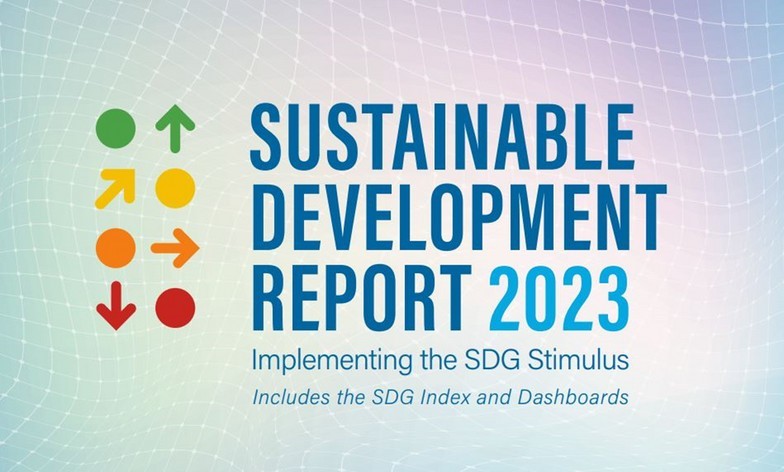
Boğaziçi University contributed to the 2023 Sustainable Development Report by undertaking the UN SDSN Turkey. The report emphasizes that countries need to undertake fundamental reforms in the global financial architecture to achieve the SDGs by 2030. In particular, it is stated that SDG incentives should be increased to close the financing gaps of developing countries.
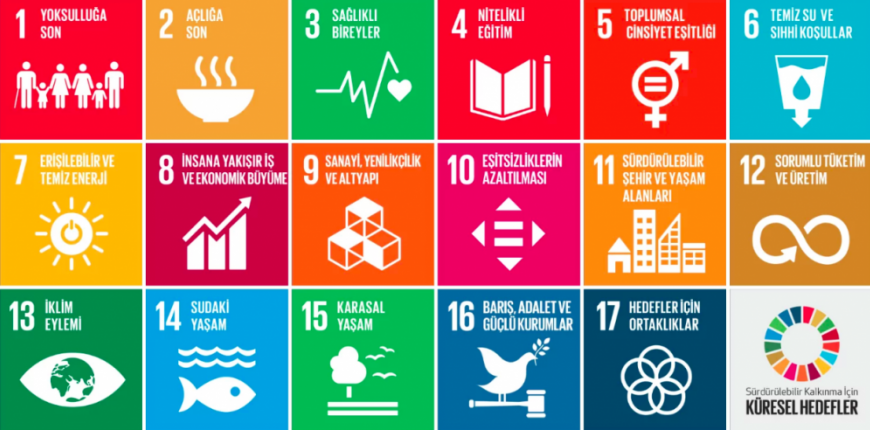
Highlights of the Report:
- In addition to SDG 2 (Hunger) and SDG 3 (Health), it is emphasized that there are significant deviations on issues such as terrestrial and marine biodiversity (SDG 14 and SDG 15), air and plastic pollution (SDG 11 and SDG 12).
- Some progress was made in access to basic infrastructure under SDG 6 (Clean Water and Sanitation), SDG 7 (Affordable and Clean Energy) and SDG 9 (Industry, Innovation and Infrastructure).
- The textile and clothing sectors are among the most important sectors in terms of negative international spillovers of greenhouse gas emissions.
- There is a strong emphasis in the report on the development of science-based tools at all levels to guide SDG actions and strengthen accountability.
Boğaziçi University's contribution to this process focuses on data collection, measurement and analysis through international collaboration, supporting the generation of science-based data to assess global progress towards the SDGs.
Related Links:
- Boğaziçi University Sustainable Development Report News
- UN SDSN Sustainable Development Report 2023
- SKA Indicators Dashboard
2024 Sustainability Report SDG-17 (Related Section)
International Data Collection Collaborations for the SDGs
Boğaziçi University actively participates in international data collection and measurement activities in line with the Sustainable Development Goals (SDGs) through the United Nations Sustainable Development Solutions Network (UN SDSN). In this context, the Sustainable Development Report, published annually, is an important source that reviews countries' progress towards the SDGs and provides comparative data among UN member states. Boğaziçi University has contributed to the 2023 Sustainable Development Report by undertaking the UN SDSN Turkey. The report emphasises that countries need to make fundamental reforms in the global financial architecture in order to achieve the SDGs by 2030. In particular, it is stated that developing countries should increase SDG incentives to close their financing gaps.
Report Highlights:
- Subjective well-being, access to immunisation, poverty and unemployment are among the indicators where progress lags most behind.
- There were deviations from targets for hunger and sustainable nutrition (SDG 2) and health outcomes (SDG 3), terrestrial and marine biodiversity (SDGs 14 and 15), air and plastic pollution (SDG 11 and SDG 12), and strong institutions and peaceful societies (SDG 16).
- Some progress was made in access to infrastructure under Clean Water and Sanitation (SDG 6), Affordable and Clean Energy (SDG 7) and Industry, Innovation and Infrastructure (SDG 9).
- The textiles and clothing sector stands out as one of the most important sectors in terms of adverse international greenhouse gas emissions.
- The need for science-based tools at all levels to guide SDG actions and strengthen accountability is emphasised.
Boğaziçi University supports the creation of science-based data on SDGs through data collection, measurement and analysis studies on SDGs and contributes to achieving sustainable development goals.
Click here for more information:
https://dashboards.sdgindex.org/
https://haberler.bogazici.edu.tr/tr/news/bilim/4/surdurulebilir-kalkinma-raporu-dunya-hayati-o/2719
