


-
Sürdürülebilirlik Raporları
-
Stratejik Planlar ve Faaliyet Raporları
-
Sürdürülebilir Kalkınma Amaçları (SKA) Faaliyetleri
-
No poverty Contents
-
Zero hunger Contents
-
2.2.1 Campus food waste tracking
-
2.3.1 Student food insecurity and hunger
-
2.3.2 Students and staff hunger interventions
-
2.3.3 Sustainable food choices on campus
-
2.3.4 Healthy and affordable food choices
-
2.5.1 Access to food security knowledge
-
2.5.2 Events for local farmers and food producers
-
2.5.3 University access to local farmers and food producers
-
2.5.4 Sustainable food purchases
-
-
Good health and wellbeing Contents
-
Quality education Contents
-
Gender equality Contents
-
5.3.1 Tracking access measures
-
5.3.2 Policy for women applications and entry
-
5.3.3 Women's access schemes
-
5.3.4 Women's application in underrepresented subjects
-
5.6.1 Policy of non-discrimination against women
-
5.6.2 Non-discrimination policies for transgender
-
5.6.3 Maternity and paternity policies
-
5.6.4 Childcare facilities for students
-
5.6.5 Childcare facilities for staff and faculty
-
5.6.6 Women's mentoring schemes
-
5.6.7 Track women's graduation rate
-
5.6.8 Policies protecting those reporting discrimination
-
-
Clean water and sanitation Contents
-
6.2.1 Water consumption tracking
-
6.3.1 Waste water treatment
-
6.3.2 Preventing water system pollution
-
6.3.3 Free drinking water provided
-
6.3.4 Water-conscious building standards
-
6.3.5 Water-conscious planting
-
6.4.1 Water reuse policy
-
6.5.1 Water management educational opportunities
-
6.5.2 Promoting conscious water usage
-
6.5.3 Off-campus water conservation support
-
6.5.4 Sustainable water extraction on campus
-
6.5.5 Cooperation on water security
-
6.5.6 Encouraging Conscious Water Use
-
6.5.7 Promoting Conscious Water Use in Communities
-
6.4.2 Water reuse measurement
-
-
Affordable and clean energy Contents
-
7.2.1 Energy-efficient renovation and building
-
7.2.2 Upgrade buildings to higher energy efficiency
-
7.2.3 Carbon reduction and emission reduction process
-
7.2.4 Plan to reduce energy consumption
-
7.2.5 Energy wastage identification
-
7.2.6 Divestment policy
-
7.4.1 Local community outreach for energy efficiency
-
7.4.2 100% renewable energy pledge
-
7.4.3 Energy efficiency services for industry
-
7.4.4 Policy development for clean energy technology
-
7.4.5 Assistance to low-carbon innovation
-
-
Decent work and economic growth Contents
-
8.2.1 Employment practice living wage
-
8.2.2 Employment practice unions
-
8.2.3 Employment policy on discrimination
-
8.2.4 Employment policy modern slavery
-
8.2.5 Employment practice equivalent rights outsourcing
-
8.2.6 Employment policy pay scale equity
-
8.2.7 Tracking pay scale for gender equity
-
8.2.8 Employment practice appeal process
-
-
Reduced inequalities Contents
-
10.6.1 Non-discriminatory admissions policy
-
10.6.10 Disability accommodation policy
-
10.6.11 Anti-harassment policy
-
10.6.2 Access to university track underrepresented groups applications
-
10.6.3 Access to university underrepresented groups recruit
-
10.6.4 Anti-discrimination policies
-
10.6.5 University diversity officer
-
10.6.6 Support for underrepresented groups
-
10.6.7 Accessible facilities
-
10.6.8 Disability support services
-
10.6.9 Disability access scheme
-
-
Sustainable cities and communities Contents
-
11.2.1 Public access to buildings
-
11.2.2 Public access to libraries
-
11.2.3 Public access to museums
-
11.2.4 Public access to green spaces
-
11.2.5 Arts and heritage contribution
-
11.2.6 Record and preserve cultural heritage
-
11.4.1 Sustainable practices targets
-
11.4.2 Promote sustainable commuting
-
11.4.3 Allow remote working
-
11.4.4 Affordable housing for employees
-
11.4.5 Affordable housing for students
-
11.4.6 Pedestrian priority on campus
-
11.4.7 Local authority collaboration regarding planning and development
-
11.4.8 Planning development - new build standards
-
11.4.9 Building on brownfield sites
-
-
Responsible consumption and production Contents
-
12.2.1 Ethical sourcing policy
-
12.2.3 Policy waste disposal - hazardous materials
-
12.2.4 Policy waste disposal - landfill policy
-
12.2.5 Policy for minimisation of plastic use
-
12.2.6 Policy for minimisation of disposable items
-
12.2.7 Disposable policy: extensions to services
-
12.2.8 Minimisation policies extended to suppliers
-
12.3.1 Waste tracking
-
12.4.1 Publication of sustainability report
-
-
Climate action Contents
-
13.2.1 Low-carbon energy tracking
-
13.3.1 Local education programmes on climate
-
13.3.2 Climate Action Plan, shared
-
13.3.3 Co-operative planning for climate change disasters
-
13.3.4 Inform and support government
-
13.3.5 Environmental education collaborate with NGOs
-
13.4.1 Commitment to carbon neutral university
-
13.4.2 Carbon neutral: achieve by date
-
-
Life below water Contents
-
14.2.1 Fresh-water ecosystems (community outreach)
-
14.2.2 Sustainable fisheries (community outreach)
-
14.2.3 Overfishing (community outreach)
-
14.3.1 Conservation and sustainable utilisation of the oceans (events)
-
14.3.2 Food from aquatic ecosystems (policies)
-
14.3.3 Maintain ecosystems and their biodiversity (direct work)
-
14.3.4 Technologies towards aquatic ecosystem damage prevention (direct work)
-
14.4.1 Water discharge guidelines and standards
-
14.4.2 Action plan to reducing plastic waste
-
14.4.3 Reducing marine pollution (policy)
-
14.5.1 Minimizing alteration of aquatic ecosystems (plan)
-
14.5.2 Monitoring the health of aquatic ecosystems
-
14.5.3 Programs towards good aquatic stewardship practices
-
14.5.4 Collaboration for shared aquatic ecosystems
-
14.5.5 Watershed management strategy
-
-
Life on land Contents
-
15.2.1 Events about sustainable use of land
-
15.2.2 Sustainably farmed food on campus
-
15.2.3 Maintain and extend current ecosystems' biodiversity
-
15.2.4 Educational programmes on ecosystems
-
15.2.5 Sustainable management of land for agriculture and tourism
-
15.2.6 Sustainable management of land for tourism and training
-
15.3.1 Sustainable use, conservation and restoration of land (policy)
-
15.3.2 Monitoring IUCN and other conservation species (policies)
-
15.3.3 Local biodiversity included in planning and development
-
15.3.4 Reduce the impact of alien species (policies)
-
15.3.5 Collaboration for shared land ecosystems
-
15.4.1 Water discharge guidelines and standards
-
15.4.2 Policy on plastic waste reduction
-
15.4.3 Policy on hazardous waste disposal
-
-
Peace justice and strong institutions Contents
-
16.2.1 Elected representation
-
16.2.2 Students' union
-
16.2.3 Identify and engage with local stakeholders
-
16.2.4 Participatory bodies for stakeholder engagement
-
16.2.5 University principles on corruption and bribery
-
16.2.6 Academic freedom policy
-
16.2.7 Publish financial data
-
16.3.1 Provide expert advice to government
-
16.3.2 Policy- and lawmakers outreach and education
-
16.3.3 Participation in government research
-
16.3.4 Neutral platform to discuss issues
-
-
Partnerships for the goals Contents
-
17.2.1 Relationships with NGOs and government for SDG policy
-
17.2.2 Cross sectoral dialogue about SDGs
-
17.2.3 International collaboration data gathering for SDG
-
17.2.4 Collaboration for SDG best practice
-
17.2.5 Collaboration with NGOs for SDGs
-
17.3.1 Publication of SDG report: SDG1
-
17.3.10 Publication of SDG report: SDG10
-
17.3.2 Publication of SDG report: SDG2
-
17.3.3 Publication of SDG report: SDG3
-
17.3.4 Publication of SDG report: SDG4
-
17.3.5 Publication of SDG report: SDG5
-
17.3.6 Publication of SDG report: SDG6
-
17.3.7 Publication of SDG report: SDG7
-
17.3.8 Publication of SDG report: SDG8
-
17.3.9 Publication of SDG report: SDG9
-
17.4.1 Education for SDGs commitment to meaningful education
-
17.4.2 Education for SDGs: specific courses on sustainability
-
17.4.3 Education for SDGs in the wider community
-
17.4.4 Sustainability literacy measurement
-
-
ISR Contents
-
....Does your institution have a valid tenure or promotion system that recognises interdisciplinary research within valid disciplines?
-
Does your institution provide special administrative support to interdisciplinary research teams within the applicable disciplines?
-
..Does your institution provide special physical facilities for interdisciplinary research teams within the applicable disciplines?
-
.Does your institution meet the criteria for interdisciplinary research success within the applicable disciplines?
-
Is there any feedback you would like to share about ISR?
-
-
-
Sürdürülebilir Kalkınma Amaçları (SKA) Raporları
-
Sayılarla Boğaziçi Üniversitesi
-
E-Bülten Arşivi
6.5.3 Off-campus water conservation support
Sustainable Off-Campus Water Management through the Horizon Europe-Funded INTEGRATOR Project
Boğaziçi University coordinates the international project “INTEGRATOR: Integrated Innovation Ecosystems for Transformative Nexus Governance towards Enhanced Water Resilience,” funded under the 2025 Horizon Europe Cluster 6 call on Food, Bioeconomy, Natural Resources, Agriculture and Environment. Bringing together 18 partners from 11 countries, the project demonstrates the University’s strong commitment to advancing practical water conservation and sustainable water management beyond the campus. Led by researchers from Boğaziçi University’s Institute of Environmental Sciences, INTEGRATOR aims to develop a data-driven water management framework that integrates digital twins, multi-scale monitoring systems and advanced modelling approaches to address the increasing pressures of climate change on the water cycle and water resources.
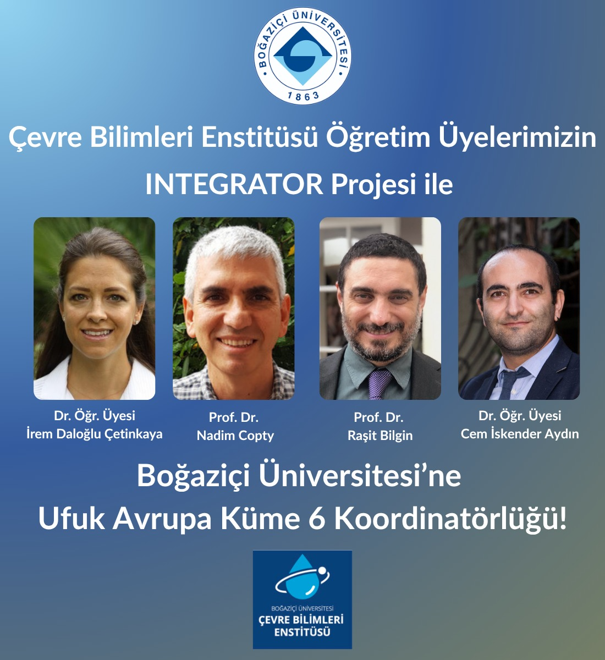
Through this extensive international collaboration, the project seeks to strengthen water resilience at local and regional levels by supporting more effective, evidence-based and adaptive governance of water resources. By coordinating INTEGRATOR, Boğaziçi University contributes to the development of off-campus solutions for the monitoring, protection and sustainable management of water resources, thereby supporting wider communities in responding to climate-related water challenges.
The full news article is available here.
Off-Campus Water Conservation Support
Boğaziçi University also actively contributes to water conservation and sustainable water management efforts off-campus. Within the scope of the INDEPENDENT Project, the university's AlgBU Microalgae Technologies Centre has conducted research on the use of microalgae in wastewater treatment systems and the reduction of water pollution. Microalgae have the capacity to absorb heavy metals, toxins and nutrients in wastewater, thus purifying the water from organic pollutants
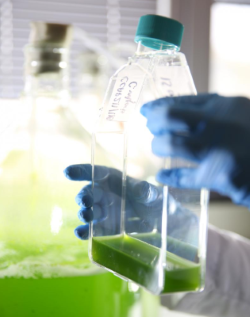
The ultrasonic water purification method developed by Boğaziçi University Institute of Environmental Sciences is used to remove residues of pharmaceuticals and wastes from personal care products that can be mixed into municipal and drinking water. This method is a first in Turkey and has taken an important step towards improving the chemical quality of water.
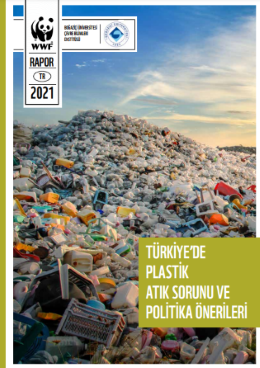
The University also prepared the report ‘Plastic Waste Problem in Turkey and Policy Recommendations’ in cooperation with WWF-Turkey. This report offers solutions to reduce plastic wastes that cause pollution by mixing into fresh water and seas.
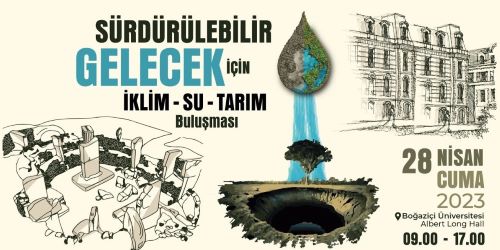
Organised in 2023, the ‘Climate-Water-Agriculture Summit for a Sustainable Future’ focused on sustainable water policies, and representatives from different sectors were informed about water management and water saving.
Finally, with the ‘Drainage by Design: Optimising Stormwater Infrastructure in Istanbul’ project carried out jointly with the Massachusetts Institute of Technology (MIT), solutions have been developed for Istanbul's flood and infrastructure problems and guidance continues to be provided on rainwater recovery.
Related Links
- AlgBU Microalgae Technologies Centre
- Drug Residues in Drinking Water News
- WWF-Turkey Plastic Waste Report
- Sustainable Agriculture Summit News
- Boğaziçi University & MIT Joint Project
2024 Sustainability Report SDG-6 (Related Section)
Off-Campus Water Conservation Support
Boğaziçi University raises awareness on conscious water consumption and sustainable water management in off-campus communities through meetings, civil society projects and scientific research.
Climate-Water-Agriculture Summit for a Sustainable Future
In 2023, at the ‘Climate-Water-Agriculture Summit for a Sustainable Future’ organised by Boğaziçi University Climate Change and Policy Research and Application Centre (İklimBU) and Argo TV, representatives and experts from various sectors came together to discuss water policies, problems and solutions, and examples of good practices in the world on water policies were given.
For More Information
https://haberler.bogazici.edu.tr/tr/news/kampus/2/gelecegin-surdurulebilir-tarimi-bogazicinde-t/2693
.png)
Integrated Biorefinery Concept for Bioeconomy Driven Development (INDEPENDENT)

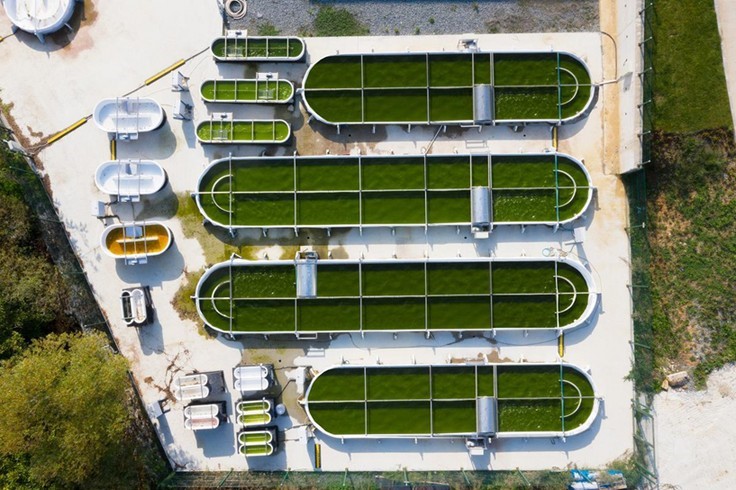
Within the scope of the Integrated Biorefinery Concept for Bioeconomy Driven Development (INDEPENDENT) project carried out at Boğaziçi University AlgBU Microalgae Technologies Centre, research has been carried out on the use of microalgae in wastewater treatment systems and reduction of water pollution. Microalgae have the capacity to absorb heavy metals, toxins and nutrients in wastewater, thus purifying water from organic and inorganic pollutants. The use of microalgae in domestic, industrial and agricultural wastewater treatment has a strong potential for water conservation and protection of water resources.
For More Information
https://algbu.bogazici.edu.tr/tr/cevre-ve-enerji
Drainage by Design: Optimizing Stormwater Infrastructure in İstanbul
The ‘Drainage by Design: Optimising Stormwater Infrastructure in Istanbul’ project, implemented in collaboration with Boğaziçi University and Massachusetts Institute of Technology (MIT), has provided guidance for both disaster prevention and stormwater recycling by offering infrastructure optimisation solutions suitable for climate change in Istanbul.
For More Information
Water Treatment with Ultrasonic Waves
The ultrasonic water treatment method developed by Boğaziçi University Institute of Environmental Sciences enables the cleaning of pharmaceutical residues and personal care product wastes (toothpaste, cosmetic creams, shampoo, body gel, etc.) that can be mixed into municipal and drinking water. With this method, which is a first in Turkey, an important step has been taken to improve the chemical quality of water and to save money by recycling water.
For More Information
Green Generation Restaurant Movement
Boğaziçi University also raises awareness on conscious water consumption through civil society projects and scientific research. The Green Generation Restaurant Movement, organised in cooperation with Boğaziçi University and the World Wildlife Fund (WWF-Turkey), encouraged the conscious use of water by adopting sustainable consumption habits in the food and beverage sector.
For More Information
https://haberler.bogazici.edu.tr/tr/news/kampus/2/yesil-nesil-restoran-hareketine-bogazici-univ/94
