


12.3.1 Waste tracking
Waste Tracking and Measurement of Recycled Waste at Boğaziçi University
Boğaziçi University systematically measures and monitors the amount of waste generated and recycled across its campuses as part of its institutional sustainability strategy and Zero Waste commitments. Environmental data reporting and waste declarations are submitted through Türkiye’s National Environmental Information System (UÇBS) managed by the Ministry of Environment, Urbanization and Climate Change to ensure transparency, accountability and continuous improvement in waste management practices.
Within this framework, recyclable and non-recyclable waste streams generated across campuses are recorded and monitored in multiple categories including:
- Paper and cardboard
- Plastic
- Glass
- Metal
- Food waste
- Waste oils
- Environmental leaf waste
- Chemical waste
- Medical waste
- Batteries and accumulators
- Toner cartridges
- Electronic waste
Tracking waste streams separately allows the university to monitor recycling performance, improve resource efficiency and identify opportunities to reduce waste generation. Further information on Boğaziçi University’s waste management and recycling practices is available through the links provided below:
- "Zero Waste" campaign launched at Boğaziçi University
- Management of Zero Waste Practices in Buildings
- Recyclable Waste Management
- Collection of Toner Waste
1. Waste Monitoring Methodology
Waste quantities are measured at designated recycling and waste collection points across university campuses. Data are recorded monthly and campus-based through coordinated collaboration among the Sustainable Green Campus Project team, campus coordinators, and support services staff, and are verified by licensed waste management contractors responsible for waste collection and recycling operations.
The monitoring system follows three main steps:
- Waste separation at source through campus recycling collection points
- Measurement and recording of collected waste quantities by category
- Verification and reporting through national environmental information systems
This methodology ensures that waste data are systematically collected, verified and consolidated for institutional monitoring and sustainability reporting.
2. Campus-Based Recyclable Waste Dataset (2022–2025)
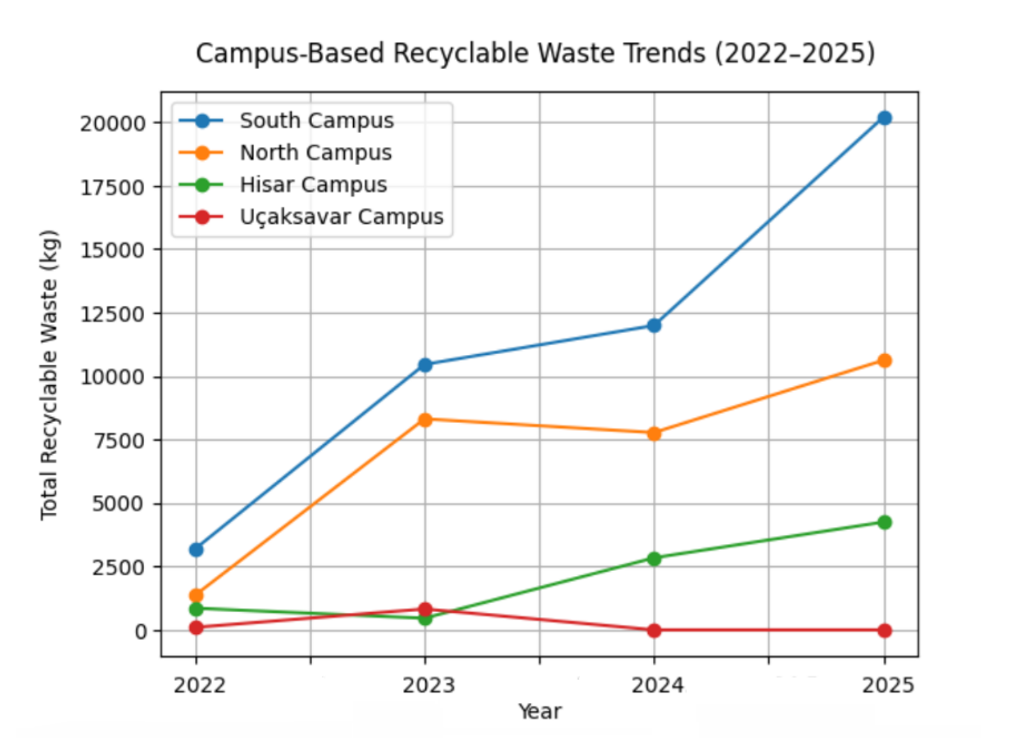
Boğaziçi University maintains a longitudinal dataset tracking recyclable waste collected across its campuses. The dataset records monthly quantities of plastic, paper and glass waste collected through recycling systems. This campus-based monitoring approach enables the university to identify variations in waste generation patterns, assess the effectiveness of recycling practices over time, and enhance recycling performance across campus facilities.
|
Year |
Month |
South Campus |
North Campus |
Hisar Campus |
Uçaksavar Campus |
||||||||
|
Plastic |
Paper |
Glass |
Plastic |
Paper |
Glass |
Plastic |
Paper |
Glass |
Plastic |
Paper |
Glass |
||
|
2022 |
April |
260 |
- |
- |
- |
- |
- |
- |
- |
- |
- |
- |
- |
|
May |
7 |
78 |
- |
10 |
30 |
- |
20 |
95 |
- |
- |
- |
- |
|
|
June |
- |
- |
- |
- |
220 |
- |
- |
200 |
- |
- |
- |
- |
|
|
July |
- |
- |
- |
- |
- |
- |
- |
- |
- |
- |
- |
- |
|
|
August |
50 |
1105 |
- |
- |
235 |
150 |
- |
20 |
- |
- |
- |
- |
|
|
September |
- |
- |
- |
- |
- |
- |
- |
- |
- |
- |
- |
- |
|
|
October |
110 |
710 |
- |
20 |
40 |
- |
10 |
50 |
- |
- |
- |
- |
|
|
November |
240 |
580 |
50 |
205 |
405 |
50 |
160 |
300 |
- |
20 |
80 |
- |
|
|
December |
- |
- |
- |
- |
- |
- |
- |
- |
- |
- |
- |
- |
|
|
Total |
667 |
2473 |
50 |
235 |
930 |
200 |
190 |
665 |
- |
20 |
80 |
- |
|
|
Note: Data are reported in kilograms (kg). |
|||||||||||||
|
Year |
Month |
South Campus |
North Campus |
Hisar Campus |
Uçaksavar Campus |
||||||||
|
Plastic |
Paper |
Glass |
Plastic |
Paper |
Glass |
Plastic |
Paper |
Glass |
Plastic |
Paper |
Glass |
||
|
2023 |
January |
40 |
- |
- |
65 |
- |
- |
- |
- |
- |
- |
- |
- |
|
February |
145 |
210 |
- |
45 |
95 |
- |
- |
- |
- |
20 |
30 |
- |
|
|
March |
410 |
800 |
- |
280 |
570 |
- |
15 |
45 |
- |
90 |
250 |
- |
|
|
April |
65 |
150 |
- |
175 |
515 |
- |
- |
- |
- |
120 |
110 |
- |
|
|
May |
160 |
550 |
- |
95 |
600 |
20 |
- |
- |
- |
15 |
85 |
- |
|
|
June |
190 |
680 |
- |
60 |
230 |
- |
5 |
50 |
- |
5 |
100 |
- |
|
|
July |
25 |
395 |
- |
15 |
505 |
- |
- |
- |
- |
- |
- |
- |
|
|
August |
120 |
1090 |
- |
105 |
1045 |
- |
- |
- |
- |
- |
- |
- |
|
|
September |
60 |
920 |
- |
60 |
910 |
- |
- |
- |
- |
- |
- |
- |
|
|
October |
270 |
1930 |
- |
170 |
1340 |
- |
65 |
125 |
- |
- |
- |
- |
|
|
November |
400 |
1040 |
- |
270 |
580 |
- |
40 |
70 |
- |
- |
- |
- |
|
|
December |
300 |
510 |
- |
210 |
355 |
- |
15 |
30 |
- |
- |
- |
- |
|
|
Total |
2185 |
8275 |
- |
1550 |
6745 |
20 |
140 |
320 |
- |
250 |
575 |
- |
|
|
Note: Data are reported in kilograms (kg). |
|||||||||||||
|
Year |
Month |
South Campus |
North Campus |
Hisar Campus |
Uçaksavar Campus |
||||||||
|
Plastic |
Paper |
Glass |
Plastic |
Paper |
Glass |
Plastic |
Paper |
Glass |
Plastic |
Paper |
Glass |
||
|
2024 |
January |
350 |
740 |
- |
200 |
500 |
- |
50 |
90 |
- |
- |
- |
- |
|
February |
340 |
920 |
- |
230 |
580 |
- |
60 |
90 |
- |
- |
- |
- |
|
|
March |
340 |
860 |
- |
220 |
560 |
- |
70 |
170 |
- |
- |
- |
- |
|
|
April |
350 |
400 |
- |
310 |
390 |
- |
140 |
190 |
- |
- |
- |
- |
|
|
May |
590 |
740 |
- |
410 |
570 |
- |
180 |
260 |
- |
- |
- |
- |
|
|
June |
400 |
510 |
- |
300 |
370 |
- |
180 |
240 |
- |
- |
- |
- |
|
|
July |
320 |
460 |
- |
200 |
290 |
- |
30 |
50 |
- |
- |
- |
- |
|
|
August |
485 |
660 |
- |
245 |
420 |
- |
150 |
220 |
- |
- |
- |
- |
|
|
September |
- |
- |
- |
- |
- |
- |
- |
- |
- |
- |
- |
- |
|
|
October |
570 |
960 |
- |
270 |
360 |
- |
140 |
200 |
- |
- |
- |
- |
|
|
November |
480 |
610 |
- |
310 |
440 |
- |
80 |
120 |
- |
- |
- |
- |
|
|
December |
360 |
550 |
- |
230 |
370 |
- |
50 |
80 |
- |
- |
- |
- |
|
|
Total |
4585 |
7410 |
- |
2925 |
4850 |
- |
1130 |
1710 |
- |
- |
- |
- |
|
|
Note: Data are reported in kilograms (kg). |
|||||||||||||
|
Year |
Month |
South Campus |
North Campus |
Hisar Campus |
Uçaksavar Campus |
||||||||
|
Plastic |
Paper |
Glass |
Plastic |
Paper |
Glass |
Plastic |
Paper |
Glass |
Plastic |
Paper |
Glass |
||
|
2025 |
January |
680 |
1090 |
- |
440 |
650 |
- |
200 |
260 |
- |
- |
- |
- |
|
February |
360 |
510 |
- |
200 |
290 |
- |
90 |
150 |
- |
- |
- |
- |
|
|
March |
320 |
400 |
- |
280 |
380 |
- |
150 |
210 |
- |
- |
- |
- |
|
|
April |
- |
- |
- |
- |
- |
- |
- |
- |
- |
- |
- |
- |
|
|
May |
515 |
680 |
- |
300 |
325 |
- |
110 |
130 |
- |
- |
- |
- |
|
|
June |
530 |
910 |
- |
380 |
520 |
- |
240 |
320 |
- |
- |
- |
- |
|
|
July |
565 |
695 |
- |
450 |
620 |
- |
200 |
250 |
- |
- |
- |
- |
|
|
August |
400 |
4540 |
- |
350 |
480 |
- |
160 |
230 |
- |
- |
- |
- |
|
|
September |
500 |
650 |
- |
360 |
470 |
- |
160 |
220 |
- |
- |
- |
- |
|
|
October |
1150 |
1650 |
- |
700 |
1060 |
- |
400 |
480 |
- |
- |
- |
- |
|
|
November |
120 |
2040 |
- |
80 |
1160 |
- |
- |
- |
- |
- |
- |
- |
|
|
December |
740 |
1160 |
- |
410 |
720 |
- |
120 |
170 |
- |
- |
- |
- |
|
|
Total |
5880 |
14325 |
- |
3950 |
6675 |
- |
1830 |
2420 |
- |
- |
- |
- |
|
|
Note: Data are reported in kilograms (kg). |
|||||||||||||
3. Annual Recyclable Waste Collected (2022–2025)
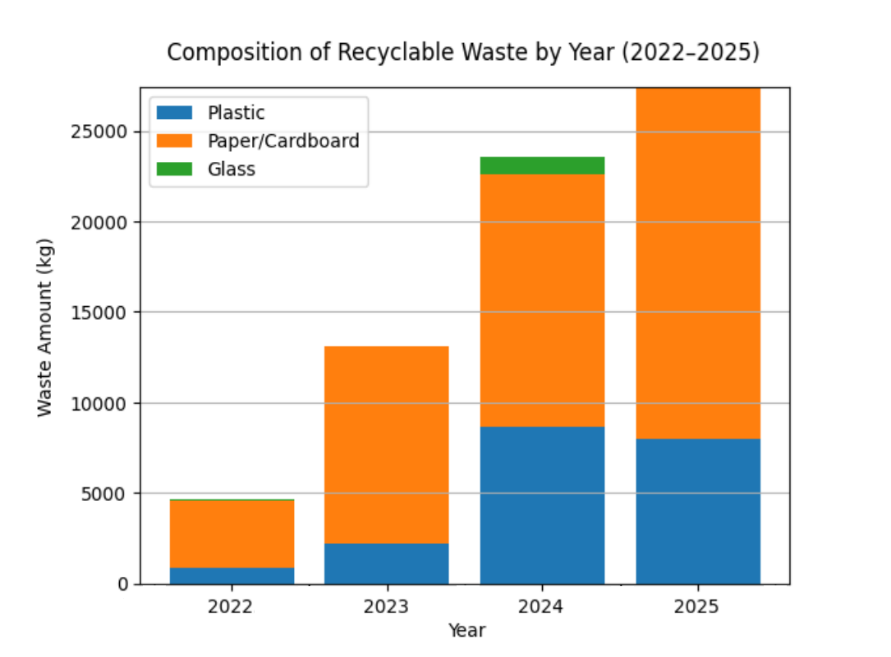
The table below presents the annual amounts of recyclable waste collected across Boğaziçi University campuses between 2022 and 2025. The data are compiled from monthly campus monitoring records and provide an overview of overall recycling performance at the institutional level.
|
Annual Recyclable Waste Collected |
||||
|
Year |
Plastic |
Paper |
Glass |
Total Recyclable Waste |
|
2022 |
1,112 |
4,148 |
250 |
5,510 |
|
2023 |
4,125 |
15,915 |
20 |
20,060 |
|
2024 |
8,640 |
13,970 |
0 |
22,610 |
|
2025 |
11,660 |
23,420 |
0 |
35,080 |
|
Note: Data are reported in kilograms (kg). |
||||
4. Waste Monitoring Trends
The waste monitoring dataset demonstrates a clear increase in recyclable waste collection across Boğaziçi University campuses between 2022 and 2025. Waste collection volumes vary depending on campus population and operational factors. Paper and cardboard account for the largest share of recyclable waste, while plastic waste also shows a noticeable growth trend over time. This trend reflects improvements in waste separation infrastructure, increased environmental awareness among students and staff, and the expansion of recycling collection systems.
5. Additional Waste Monitoring
In addition to campus-based recycling data, Boğaziçi University also monitors several other waste streams generated through campus operations. These include organic waste, scrap materials and hazardous waste produced in dining halls, laboratories, and maintenance activities. Monitoring these streams supports compliance with environmental regulations and helps improve waste recovery and disposal practices.
|
Organic and Biodegradable Waste (2025) |
|
|
Waste Type |
Amount (kg) |
|
Total Food Waste |
48,251 |
|
Food Waste Recycled by İSTAÇ |
33,430 |
|
Environmental Leaf Waste |
15,520 |
|
Total Waste Oil |
6,305 |
|
Recycled Waste Oil |
6,305 |
|
Scrap Waste (2025) |
|
|
Waste Type |
Amount (kg) |
|
Metal Scrap |
38,560 |
| Medical Waste Generation by Department (2022–2025) | ||||
|---|---|---|---|---|
| Department | 2022 | 2023 | 2024 | 2025 |
| Health, Culture and Sports Department – Medico-Social Unit Directorate | 991 | 953 | 698 | 350 |
| Institute of Biomedical Engineering | 472 | 623 | 480 | 578 |
| Faculty of Arts and Sciences – Department of Molecular Biology and Genetics | 1051 | 695 | 593 | 292 |
| Center for Life Sciences and Technologies – Animal Care and Production Unit (Vivarium) | 811 | 703 | 1616 | 606 |
| Faculty of Arts and Sciences – Department of Chemistry | - | - | 324 | 297 |
| Total (kg) | 3325 | 2974 | 3711 | 2123 |
6. National Environmental Information System (UÇBS)
Boğaziçi University utilises the National Environmental Information System (UÇBS) to report waste and other environmental data. The system provides digital tools for collecting, monitoring, and reporting environmental information across multiple operational areas and environmental management processes.
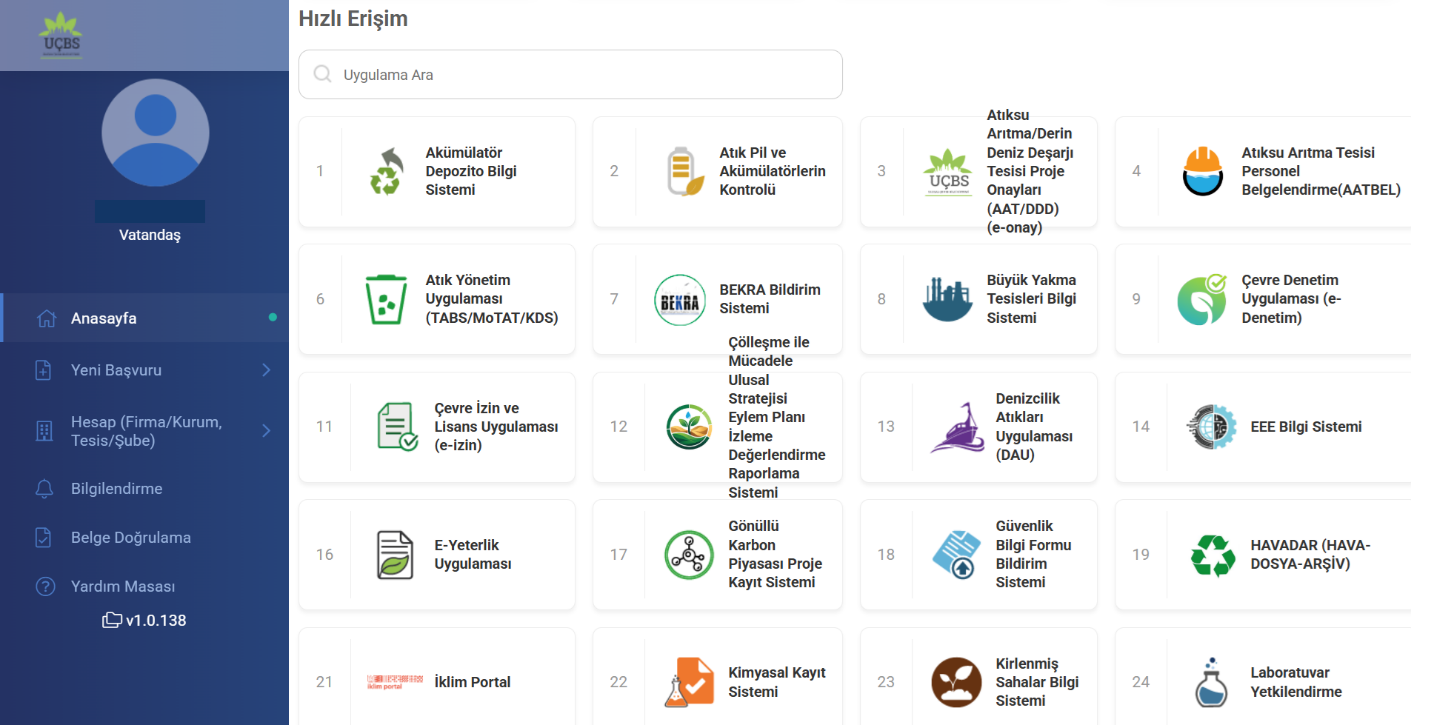
The following applications are used within the UÇBS framework:
- Waste Management Applications (TABS / MoTAT / KDS): These applications support the monitoring of the collection, transportation, and disposal of hazardous and recyclable waste.
- TABS – Hazardous Waste Declaration System
- MoTAT – Mobile Hazardous Waste Tracking System
- KDS – Mass Balance System
- Zero Waste Information System: Tracks waste separation, collection, and recycling activities implemented under the national Zero Waste Programme.
- Waste Batteries and Accumulators Monitoring System: Supports the monitoring of the collection and transfer of waste batteries and accumulators to licensed recycling facilities.
- Accumulator Deposit Information System: An information system used to record the required data entries and reporting for accumulators subject to the deposit system in accordance with GEKAP (Recycling Contribution Fee) requirements.
- Wastewater Information System: Supports the monitoring of wastewater management and treatment processes.
- Environmental Permit and Licence System (e-Permit): Supports environmental permit procedures and compliance monitoring.
- Greenhouse Gas Monitoring System: Supports the monitoring and verification of greenhouse gas emissions.
- Laboratory Authorisation System: Enables environmental laboratories to digitally manage measurement data, personnel and equipment information, and certificate renewal processes.
These systems ensure transparency and reliable monitoring of operational performance in areas such as waste management, water management, and energy efficiency, while supporting the University in strengthening environmental governance and achieving its sustainability goals.
7. Institutional Waste Reduction Initiatives
Boğaziçi University implements a range of initiatives to reduce waste generation and increase recycling rates across its campuses.
These initiatives include:
- Expansion of recycling collection infrastructure across campus buildings
- Awareness campaigns promoting waste separation at source
- Collaboration with licensed waste management contractors
- Continuous monitoring of recycling performance
- Integration of waste data into sustainability reporting processes
These initiatives support the university’s long-term goal of improving circular resource management and reducing the environmental impact of campus operations.
8. Transparency and Public Reporting
Boğaziçi University regularly publishes waste monitoring data through sustainability reports and institutional transparency platforms. This ensures that stakeholders can evaluate waste management performance and supports evidence-based decision-making in campus sustainability management. The publication of waste monitoring data also contributes to national environmental reporting systems and international sustainability assessments.
