


-
Sürdürülebilirlik Raporları
-
Stratejik Planlar ve Faaliyet Raporları
-
Sürdürülebilir Kalkınma Amaçları (SKA) Faaliyetleri
-
No poverty Contents
-
Zero hunger Contents
-
2.2.1 Campus food waste tracking
-
2.3.1 Student food insecurity and hunger
-
2.3.2 Students and staff hunger interventions
-
2.3.3 Sustainable food choices on campus
-
2.3.4 Healthy and affordable food choices
-
2.5.1 Access to food security knowledge
-
2.5.2 Events for local farmers and food producers
-
2.5.3 University access to local farmers and food producers
-
2.5.4 Sustainable food purchases
-
-
Good health and wellbeing Contents
-
Quality education Contents
-
Gender equality Contents
-
5.3.1 Tracking access measures
-
5.3.2 Policy for women applications and entry
-
5.3.3 Women's access schemes
-
5.3.4 Women's application in underrepresented subjects
-
5.6.1 Policy of non-discrimination against women
-
5.6.2 Non-discrimination policies for transgender
-
5.6.3 Maternity and paternity policies
-
5.6.4 Childcare facilities for students
-
5.6.5 Childcare facilities for staff and faculty
-
5.6.6 Women's mentoring schemes
-
5.6.7 Track women's graduation rate
-
5.6.8 Policies protecting those reporting discrimination
-
-
Clean water and sanitation Contents
-
6.2.1 Water consumption tracking
-
6.3.1 Waste water treatment
-
6.3.2 Preventing water system pollution
-
6.3.3 Free drinking water provided
-
6.3.4 Water-conscious building standards
-
6.3.5 Water-conscious planting
-
6.4.1 Water reuse policy
-
6.5.1 Water management educational opportunities
-
6.5.2 Promoting conscious water usage
-
6.5.3 Off-campus water conservation support
-
6.5.4 Sustainable water extraction on campus
-
6.5.5 Cooperation on water security
-
6.5.6 Encouraging Conscious Water Use
-
6.5.7 Promoting Conscious Water Use in Communities
-
6.4.2 Water reuse measurement
-
-
Affordable and clean energy Contents
-
7.2.1 Energy-efficient renovation and building
-
7.2.2 Upgrade buildings to higher energy efficiency
-
7.2.3 Carbon reduction and emission reduction process
-
7.2.4 Plan to reduce energy consumption
-
7.2.5 Energy wastage identification
-
7.2.6 Divestment policy
-
7.4.1 Local community outreach for energy efficiency
-
7.4.2 100% renewable energy pledge
-
7.4.3 Energy efficiency services for industry
-
7.4.4 Policy development for clean energy technology
-
7.4.5 Assistance to low-carbon innovation
-
-
Decent work and economic growth Contents
-
8.2.1 Employment practice living wage
-
8.2.2 Employment practice unions
-
8.2.3 Employment policy on discrimination
-
8.2.4 Employment policy modern slavery
-
8.2.5 Employment practice equivalent rights outsourcing
-
8.2.6 Employment policy pay scale equity
-
8.2.7 Tracking pay scale for gender equity
-
8.2.8 Employment practice appeal process
-
-
Reduced inequalities Contents
-
10.6.1 Non-discriminatory admissions policy
-
10.6.10 Disability accommodation policy
-
10.6.11 Anti-harassment policy
-
10.6.2 Access to university track underrepresented groups applications
-
10.6.3 Access to university underrepresented groups recruit
-
10.6.4 Anti-discrimination policies
-
10.6.5 University diversity officer
-
10.6.6 Support for underrepresented groups
-
10.6.7 Accessible facilities
-
10.6.8 Disability support services
-
10.6.9 Disability access scheme
-
-
Sustainable cities and communities Contents
-
11.2.1 Public access to buildings
-
11.2.2 Public access to libraries
-
11.2.3 Public access to museums
-
11.2.4 Public access to green spaces
-
11.2.5 Arts and heritage contribution
-
11.2.6 Record and preserve cultural heritage
-
11.4.1 Sustainable practices targets
-
11.4.2 Promote sustainable commuting
-
11.4.3 Allow remote working
-
11.4.4 Affordable housing for employees
-
11.4.5 Affordable housing for students
-
11.4.6 Pedestrian priority on campus
-
11.4.7 Local authority collaboration regarding planning and development
-
11.4.8 Planning development - new build standards
-
11.4.9 Building on brownfield sites
-
-
Responsible consumption and production Contents
-
12.2.1 Ethical sourcing policy
-
12.2.3 Policy waste disposal - hazardous materials
-
12.2.4 Policy waste disposal - landfill policy
-
12.2.5 Policy for minimisation of plastic use
-
12.2.6 Policy for minimisation of disposable items
-
12.2.7 Disposable policy: extensions to services
-
12.2.8 Minimisation policies extended to suppliers
-
12.3.1 Waste tracking
-
12.4.1 Publication of sustainability report
-
-
Climate action Contents
-
13.2.1 Low-carbon energy tracking
-
13.3.1 Local education programmes on climate
-
13.3.2 Climate Action Plan, shared
-
13.3.3 Co-operative planning for climate change disasters
-
13.3.4 Inform and support government
-
13.3.5 Environmental education collaborate with NGOs
-
13.4.1 Commitment to carbon neutral university
-
13.4.2 Carbon neutral: achieve by date
-
-
Life below water Contents
-
14.2.1 Fresh-water ecosystems (community outreach)
-
14.2.2 Sustainable fisheries (community outreach)
-
14.2.3 Overfishing (community outreach)
-
14.3.1 Conservation and sustainable utilisation of the oceans (events)
-
14.3.2 Food from aquatic ecosystems (policies)
-
14.3.3 Maintain ecosystems and their biodiversity (direct work)
-
14.3.4 Technologies towards aquatic ecosystem damage prevention (direct work)
-
14.4.1 Water discharge guidelines and standards
-
14.4.2 Action plan to reducing plastic waste
-
14.4.3 Reducing marine pollution (policy)
-
14.5.1 Minimizing alteration of aquatic ecosystems (plan)
-
14.5.2 Monitoring the health of aquatic ecosystems
-
14.5.3 Programs towards good aquatic stewardship practices
-
14.5.4 Collaboration for shared aquatic ecosystems
-
14.5.5 Watershed management strategy
-
-
Life on land Contents
-
15.2.1 Events about sustainable use of land
-
15.2.2 Sustainably farmed food on campus
-
15.2.3 Maintain and extend current ecosystems' biodiversity
-
15.2.4 Educational programmes on ecosystems
-
15.2.5 Sustainable management of land for agriculture and tourism
-
15.2.6 Sustainable management of land for tourism and training
-
15.3.1 Sustainable use, conservation and restoration of land (policy)
-
15.3.2 Monitoring IUCN and other conservation species (policies)
-
15.3.3 Local biodiversity included in planning and development
-
15.3.4 Reduce the impact of alien species (policies)
-
15.3.5 Collaboration for shared land ecosystems
-
15.4.1 Water discharge guidelines and standards
-
15.4.2 Policy on plastic waste reduction
-
15.4.3 Policy on hazardous waste disposal
-
-
Peace justice and strong institutions Contents
-
16.2.1 Elected representation
-
16.2.2 Students' union
-
16.2.3 Identify and engage with local stakeholders
-
16.2.4 Participatory bodies for stakeholder engagement
-
16.2.5 University principles on corruption and bribery
-
16.2.6 Academic freedom policy
-
16.2.7 Publish financial data
-
16.3.1 Provide expert advice to government
-
16.3.2 Policy- and lawmakers outreach and education
-
16.3.3 Participation in government research
-
16.3.4 Neutral platform to discuss issues
-
-
Partnerships for the goals Contents
-
17.2.1 Relationships with NGOs and government for SDG policy
-
17.2.2 Cross sectoral dialogue about SDGs
-
17.2.3 International collaboration data gathering for SDG
-
17.2.4 Collaboration for SDG best practice
-
17.2.5 Collaboration with NGOs for SDGs
-
17.3.1 Publication of SDG report: SDG1
-
17.3.10 Publication of SDG report: SDG10
-
17.3.2 Publication of SDG report: SDG2
-
17.3.3 Publication of SDG report: SDG3
-
17.3.4 Publication of SDG report: SDG4
-
17.3.5 Publication of SDG report: SDG5
-
17.3.6 Publication of SDG report: SDG6
-
17.3.7 Publication of SDG report: SDG7
-
17.3.8 Publication of SDG report: SDG8
-
17.3.9 Publication of SDG report: SDG9
-
17.4.1 Education for SDGs commitment to meaningful education
-
17.4.2 Education for SDGs: specific courses on sustainability
-
17.4.3 Education for SDGs in the wider community
-
17.4.4 Sustainability literacy measurement
-
-
ISR Contents
-
....Does your institution have a valid tenure or promotion system that recognises interdisciplinary research within valid disciplines?
-
Does your institution provide special administrative support to interdisciplinary research teams within the applicable disciplines?
-
..Does your institution provide special physical facilities for interdisciplinary research teams within the applicable disciplines?
-
.Does your institution meet the criteria for interdisciplinary research success within the applicable disciplines?
-
Is there any feedback you would like to share about ISR?
-
-
-
Sürdürülebilir Kalkınma Amaçları (SKA) Raporları
-
Sayılarla Boğaziçi Üniversitesi
-
E-Bülten Arşivi
3.3.5 Mental health support
BOĞAZİÇİ UNIVERSITY STUDENT GUIDANCE AND PSYCHOLOGICAL COUNSELING CENTER (BÜREM)
BÜREM provides free services to Boğaziçi University students and aims to support their individual, social and academic development throughout their university life. Students who apply to BÜREM first fill out an application form and are invited for an interview. After the pre-interview, students are directed to various services such as group work, individual counseling and/or psychiatric interviews in line with their needs. BÜREM services are based on the ethical principles of confidentiality and competence.The Center also works with other units to provide the necessary university environment for students' well-rounded development.
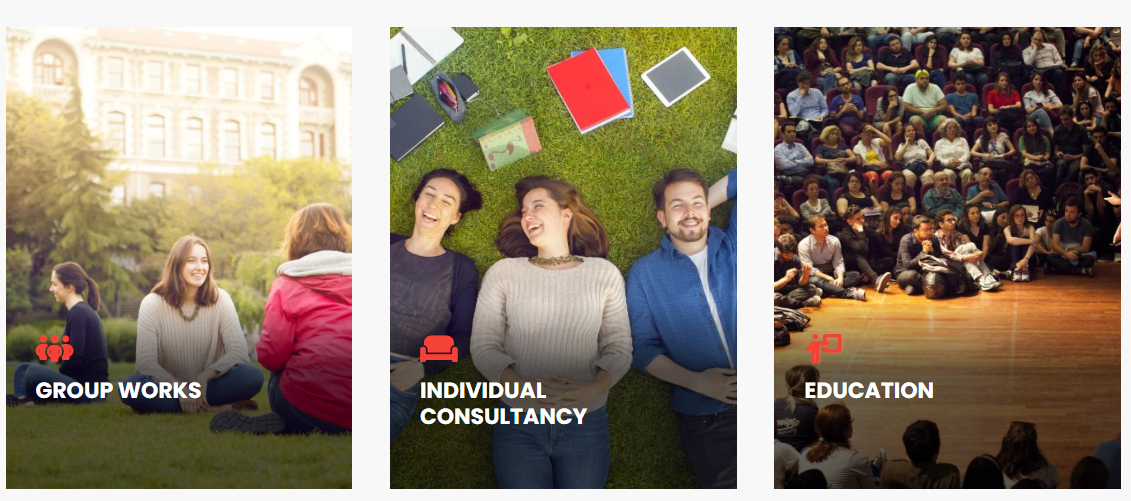
Individual Counseling: Students may be referred to individual counseling services by our specialists if needed after an intake interview. Individual counseling consists of one-on-one meetings.
Group Workshops: It is a psychological counseling service that aims to increase awareness and personal development under the leadership of an expert. It is carried out for an average of 4-10 weeks, one session per week. Each session is planned for approximately 1.5 hours.
Seminars: BÜREM organizes seminars for students on specific topics in line with their needs. These seminars are announced to all students via e-mail.
Self-Help Brochures: Self-help brochures that can provide support on various topics such as family relationships, friendships, separation and loneliness, loss and grief, self-confidence, coping with stress, time management, experiencing and expressing emotions, depression and suicide are available online on the BÜREM page.
https://burem.bogazici.edu.tr/tr/pages/kendine-yardim-brosurlerimiz/5750
|
BÜREM Self-Help Brochures |
|
Being a Student at the Preparatory School |
|
Learning English at the Preparatory School |
|
Success in Thesis Writing |
|
Drinking Alcohol |
|
Depression |
|
Suicide |
|
Family Relations |
|
Loss and Mourning |
|
Separation and Loneliness |
|
Coping with Stress |
|
Self Confidence |
|
Efficient Study |
|
Experiencing and Expressing Emotions |
|
Perfectionism |
|
Time Management |
|
Quitting Smoking |
|
Friendships |
Getting to Know the University (Orientation) Program: The Orientation Program is organized and implemented by the Public Relations and Dean of Students' Office at the beginning of each academic year, in September-October, for new students to get to know the university and the system closely. BÜREM supports this program, which it has led in the past years, during the evaluation phase.
For more information, you can visit BÜREM's web page: https://burem.bogazici.edu.tr/tr
BOĞAZİÇİ UNIVERSITY CENTER FOR PSYCHOLOGICAL RESEARCH AND SERVICES CENTER (BÜPAM)
BÜPAM has been working under the Boğaziçi University Psychology Department since 1994 and meets the demands of the university within the framework of a certain quota. The services provided include psychotherapy and psychological counseling services for adults, couples, children, adolescents and families, clinical assessment and evaluation, employee psychological support program, group trainings and seminars, and scientific research and training in psychology.
|
BÜPAM Trainings |
|
Public Trainings: |
|
Child Development and Family Interaction |
|
Coping with Stress |
|
Building Healthy Social Relationships |
|
To be able to assert oneself confidently in society |
|
Exam Anxiety |
|
Education Challenges |
|
Environmental Awareness and Sensitivity |
|
Training Seminars for Those Working in the Field of Psychology |
|
Trainings for Institutions and Organizations: |
|
Contact |
|
Coping with Stress |
|
Teacher-Student Relationship |
For more information, you can visit BÜREM's web page: https://bupampsi.bogazici.edu.tr/en
BOĞAZİÇİ UNIVERSITY SARITEPE STUDENT SUPPORT UNIT (BÜSÖD)
BÜSÖD serves students living at Sarıtepe Campus and aims to support their individual, social and academic development throughout their university life. In this context, it provides guidance and psychological counseling services to students and helps them adapt to university life. BÜSÖD opened in February 2014 and employs two part-time specialists.
Click here to visit the BÜSÖD web page: http://saritepe.test.boun.edu.tr/?q=content/busod
.png)
BÜREM 2024 Annual Activity Report
A visual summary of the activities carried out by Boğaziçi University Student Counselling and Psychological Guidance Centre in 2024.
BÜREM's activities in 2024 (1 January 2024 - 31 December 2024) are listed in this report under five main headings. These are: 1. Individual counselling, 2. Group work, 3. In-service training and events, 4. Joint work with other units, and 5. Evaluation, resource creation and research. Between 1 January 2024 and 31 December 2024, 712 students applied to our centre for services. Following preliminary interviews, these students were directed to services appropriate to their personal needs. In addition to this number, approximately 206 students participated in group and workshop activities open to all students. As in previous years, the most frequently reported issues in applications were mood and anxiety problems. This year, it was observed that students applied with serious complaints, and 64 students were referred to psychiatric services outside the institution. Throughout the year, a total of 328 students were referred to individual consultations, 273 students to discounted psychotherapy sessions, 298 students to group sessions, and 64 students to psychiatric support outside the institution, while 83 students did not attend their preliminary consultation appointments. In addition, 15 students were seen for emergency consultations, and 31 students attended single-session follow-up consultations. BÜREM specialists participated in regular weekly supervision sessions throughout the year for their professional development.
Overview of 2024

Individual Counselling Services
The reasons why students apply to BÜREM and the distribution of the services they receive indicate the centre's areas of focus.
.png)
.png)
Group Work and Workshops
Throughout the year, group work sessions on various topics have been organised to support students' personal and academic development.
.png)
Needs and Steps Towards the Future
.png) Increasing Need for Specialists
Increasing Need for Specialists
The need to increase the number of specialists in order to meet student demands and reduce waiting times has been communicated to the university administration. The process is being monitored.
Psychiatrist Support Provided
In line with the need reported to the administration, it has been announced that a psychiatrist will begin work within the Medical-Social Department by 2025. This development will significantly improve service quality.
