


17.4.1 Education for SDGs commitment to meaningful education
Boğaziçi University's Commitment to Meaningful Education for Sustainable Development Goals (2023)
Boğaziçi University aims to provide a meaningful education to all students across the university by integrating the Sustainable Development Goals (SDGs) into social, environmental and academic practices. By integrating the SDGs into education, it is aimed for students to understand their global responsibilities and gain a perspective towards finding solutions to sustainability issues.
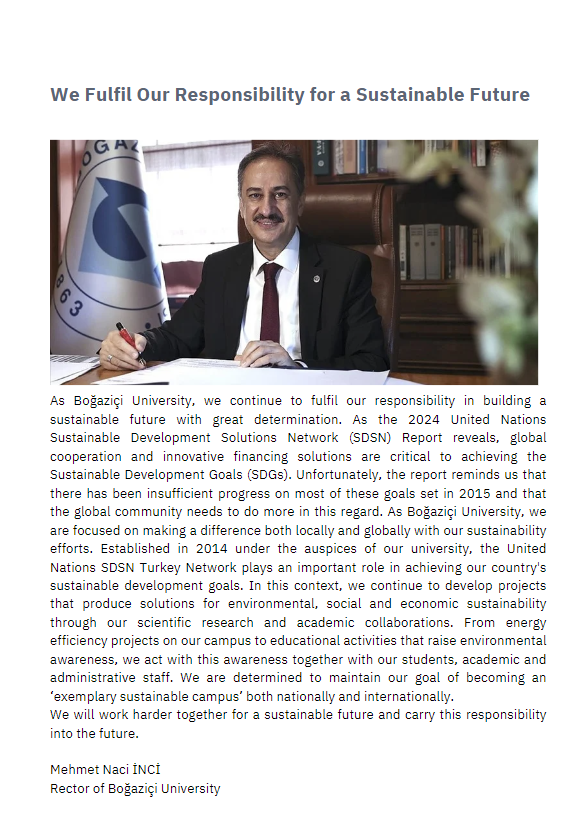
1. UN SDSN Turkey Board of Members Meeting
At the UN SDSN Turkey Members Board Meeting held at Boğaziçi University on 14 June 2023, Rector Prof. Dr. Mehmet Naci İnci emphasised that universities have a great responsibility in achieving the SDGs. Prof. İnci stated that universities can be sustainability champions not only to look better in the indices, but also with joint studies that will benefit the society, environment and economy.
2. UE4SD Project
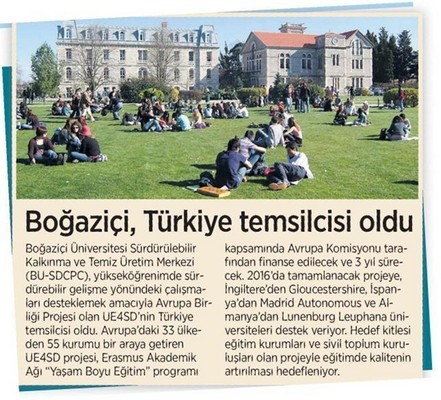
Boğaziçi University was the Turkish representative of the Education for Sustainable Development in Higher Education (UE4SD) Project, which involved 55 partners from 33 countries in Europe between 2014 and 2016. This project aimed to increase the professional capacity of university educators on education for sustainable development. In addition, as a result of the project, an online resource platform for university educators was created and awareness on sustainable development education was raised.
3. Sustainable Green Campus Practices Commission
With the Sustainable Green Campus Practices Commission established in 2014, Boğaziçi University carries out meaningful studies on issues such as raising environmental awareness and improving energy and natural resource management. The aim of this commission is to create an exemplary green campus life by supporting the understanding of environmental and social sustainability throughout the university and integrating it into educational programmes.
4. Peace Education Application and Research Centre
Boğaziçi University aims to spread the understanding and culture of peaceful solutions through the Peace Education Research and Application Centre, the first and only peace education centre established under the roof of a university in Turkey. Founded in 2007, this centre aims to combat discrimination and eliminate the concept of ‘other’ by integrating peace education into university programmes.
5. SDSN Youth Turkey and Sustainability Festivals
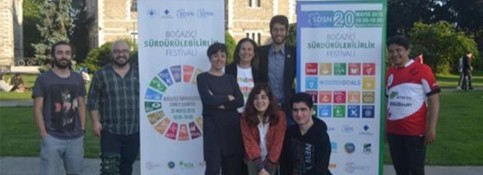
SDSN Youth Turkey, led by Boğaziçi University, organises Sustainability Festivals to address the issue of sustainability in an interactive way. These festivals are designed to raise awareness about sustainable development among students and young people and provide a meaningful educational process.
By including SDGs in its education and research processes, Boğaziçi University offers a meaningful educational commitment to equip its students for a sustainable future.
Boğaziçi University Student Wins English Translation Award
Eda Duman, a student in the Department of Translation Studies at Boğaziçi University, came second in the English category of the 2023 Young Translators Competition organised by the European Union Presidency. The competition was held in Istanbul on 25 November 2023, with 125 students from 41 universities taking part.
Eda Duman attributed her success to the education she received at Boğaziçi University, saying, ‘Our university already provides a strong foundation.’ She explained that during the process, she and Department Chair Prof. Dr. Mehmet Şahin focused on adapting the language of the European Union to Turkish, using the EU's official guidelines.
This achievement once again highlights the quality of translation education at Boğaziçi University.

https://haberler.bogazici.edu.tr/tr/news/akademik/1/bogazicili-ogrenciye-ingilizce-ceviri-odulu/2800
Boğaziçi University achieved significant success in the QS 2024 World University Rankings by Subject
- The university ranked among the top 300 in three of the five core subjects worldwide:
- Social sciences and business: 253rd place (up 57 places)
- Arts and humanities: 244th place (up 37 places)
- Engineering and technology: 273rd place (up 20 places)
- Achievements in sub-fields:
- Ranked among the top 250 in 8 sub-fields,
- and among the top 400 in 14 sub-fields.
- The best sub-field ranking is in ‘petroleum engineering’ in the 51-100 range.
- ‘Tourism management’ is in the 101-150 range, while ‘computer science and information systems’ and ‘electrical and electronic engineering’ are in the 201-250 range.
- Among other subfields, ‘statistics and operations research,’ ‘linguistics,’ ‘civil engineering,’ and ‘history’ are in the top 250.
- ‘Accounting and Finance,’ ‘Economics and Econometrics,’ ‘Education,’ ‘Chemical Engineering,’ ‘Civil Engineering,’ and ‘Mechanical, Aerospace, and Manufacturing Engineering’ are represented in the top 400.
.png)
Boğaziçi University Climbs 96 Places in QS World University Rankings
Boğaziçi University has climbed 96 places in the QS World University Rankings 2025, published by London-based higher education ranking organisation QS, to reach 418th place. Boğaziçi University has thus re-entered the top 500 universities after a 10-year hiatus and has also become the European higher education institution with the most progress.
QS evaluated 5,663 universities from 106 countries based on criteria such as research impact, academic reputation, employer reputation, employer reputation, educational experience, internationalisation and sustainability. Boğaziçi University has achieved significant success, rising approximately 350 places in the last three years.
Rector Prof. Dr. Mehmet Naci İnci said that rising from 701-750 to 418 in the last three years was particularly motivating, but that they did not consider it sufficient. He stated that they will continue to make further progress in the areas of research, R&D, education, employment, sustainability and university-industry cooperation.
Notable achievements:
- Employment power: Ranked 1st in Turkey and 19th in the world, rising 102 places.
- Employer reputation: 118th, up 20 places.
- Academic reputation: 353rd, up 25 places.
- Sustainability: 334th.
With these achievements, Boğaziçi University demonstrates its rising academic profile worldwide.
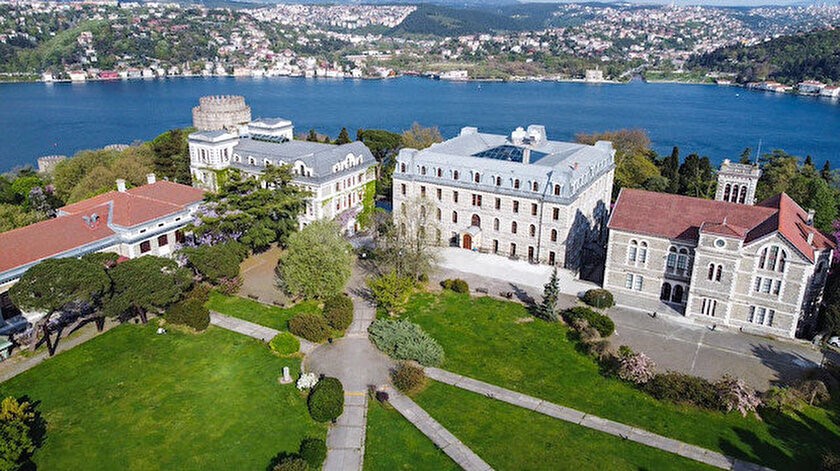
Boğaziçi University Ranks 165th in Europe
Boğaziçi University has climbed 34 places to rank 165th in the ‘Best Universities in Europe 2025’ ranking by QS, a London-based higher education ranking organisation. Among 685 universities from 42 European countries evaluated in the ranking, Boğaziçi University stood out as the institution with the most significant progress.
The university performed particularly well in the areas of ‘employability’ and ‘employer reputation.’ Boğaziçi University climbed 10 places in employer reputation, ranking 32nd, and 35th in employability. It ranked 137th in academic reputation, 140th in educational exchange programmes, and 152nd in sustainability criteria.
Among 72 higher education institutions in Turkey, Boğaziçi University ranked first in employment power and third in employer reputation and sustainability.
Rector Prof. Dr. Mehmet Naci İnci noted that collaborations and innovative projects carried out in Europe played a significant role in this success, stating that they do not consider their ranking sufficient and aim to make further progress in research and development, academic quality, and international collaborations.
https://haberler.bogazici.edu.tr/tr/news/mezun/3/bogazici-universitesi-avrupada-165inci-siraya/2846
Boğaziçi University YADYOK Renews EAQUALS Accreditation Until 2028, Strengthening Its International Quality
Boğaziçi University School of Foreign Languages (YADYOK) English Preparatory Unit has once again demonstrated its compliance with international education standards by renewing its EAQUALS accreditation, a globally recognised indicator of quality in language education, until 2028.
The rigorous evaluation process, which began in the 2023-2024 academic year, concluded with on-site visits in April 2024. The institution was assessed across 12 different categories, including management, teaching quality, student support services, curriculum design, and learning environment. Within this scope, ‘excellent standards’ were achieved in six criteria, while ‘high standards’ were achieved in the remaining areas.
Prof. Dr. Sevtap Demirci, Director of YADYOK, stated that this important achievement reflects not only Boğaziçi University's long-standing academic tradition, but also its innovative and student-centred approach to language education.
EAQUALS accreditation will continue to enhance Boğaziçi University's competitive edge in international academic collaborations and student preferences, thereby strengthening its global reputation.
.png)
Boğaziçi University Improves Its Score in THE 2025 World University Rankings
Boğaziçi University has attracted attention by improving its score in all evaluation criteria in the 2025 World University Rankings published by Times Higher Education (THE) based in London. Ranked in the 601-800 band, Boğaziçi maintained its 5th position among 91 universities in Turkey.
The university improved its score from 57.4 to 62 in the ‘Research Quality’ criterion, from 50.6 to 52.9 in ‘International Outlook,’ ‘Research Environment’ from 26.6 to 29.7, and ‘Educational Quality’ from 26.1 to 28. Additionally, it scored 85 points in patents and 83.7 points in industry income.
These increases demonstrate the university's progress in research and education quality, increased international collaborations, and strengthened university-industry partnerships. THE rankings are an important analysis that evaluates the performance of universities worldwide in areas such as education, research, industry relations, and global outlook.
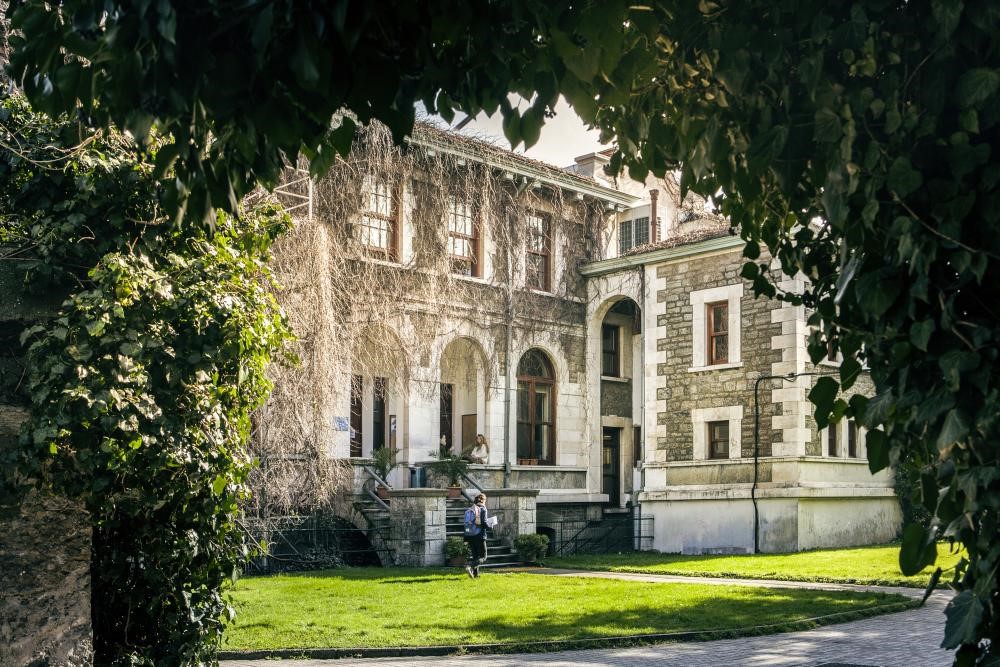
Boğaziçi University Ranked Among the Top 100 in THE's Interdisciplinary Science Ranking
Times Higher Education (THE), a London-based higher education ranking organisation, has published its first ‘Interdisciplinary Science Ranking 2025’ in collaboration with Schmidt Science Fellows. In the ranking, Boğaziçi University achieved a significant success by ranking 90th in the world.
At the top of the list is the Massachusetts Institute of Technology (MIT) from the United States.
THE evaluated higher education institutions based on various criteria, including funding allocated to interdisciplinary scientific research, industry funding, management support, promotion systems, physical infrastructure, and the quality, quantity, and reputation of publications.
Boğaziçi University demonstrated high performance in the ‘Inputs’ category with a score of 77.3, particularly in terms of funds allocated to interdisciplinary research and industry funding; in the ‘Outputs’ category, which evaluates the quality, quantity, and reputation of academic publications, it received a score of 56.7.
This achievement demonstrates that Boğaziçi University holds a globally competitive position in the field of interdisciplinary science.
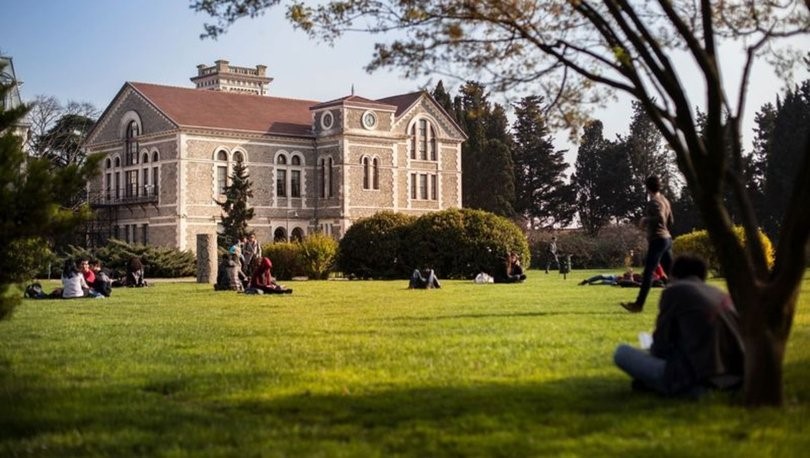
Boğaziçi University Advances Its Performance in THE Subject Rankings
Boğaziçi University has achieved significant success in the 2025 THE Subject Rankings, prepared by the London-based higher education ranking organisation Times Higher Education (THE). The university has risen in the rankings in five subjects and entered the rankings for the first time in psychology.
THE rankings evaluate universities based on criteria such as ‘teaching quality,’ ‘research environment,’ ‘research quality,’ ‘industry-university collaboration,’ and ‘international outlook.’ Boğaziçi University demonstrated its best performance this year in the ‘education’ field, moving up to the 151-175 ranking band.
The field of physics made progress, moving from the 601-800 band last year to the 501-600 range. In the social sciences, it rose to the 251-300 band, enhancing its international visibility. In engineering and arts and humanities, it maintained its position in the 401-500 range.
Another notable development was the first-time inclusion of the psychology field in the rankings, ranking in the 401-500 band.
With these achievements, Boğaziçi University continues to strengthen its academic quality and international prestige.
Boğaziçi University Continues to Double Its Academic Success
Boğaziçi University has consolidated its academic success by recording a significant rise in the 2025 QS World University Rankings by Subject. The university ranked among the top 300 in the world in eight different fields and among the top 500 in a total of 17 fields.
Notably, Boğaziçi University climbed to 225th place in Social Sciences and Management and 257th place in Engineering and Technology, achieving remarkable progress of 85 and 36 places, respectively, in these two fields over the past three years.
Top 100 Success in Tourism Management
The university, which ranks in the 51-100 band in Tourism Management, stands out for its international success in this field. It also demonstrates a strong presence in the 250-300 ranking band in fields such as Linguistics, History, Civil Engineering, Computer Engineering, Electrical & Electronic Engineering, Business Administration, and Education.
Growing Academic and Employer Reputation
Boğaziçi University stands out with its growing reputation in academic circles and the business world. Its academic reputation score in Social Sciences and Management rose to 68.7, while its employer reputation rose to 73.3. It also received high scores in research performance and international collaborations.
Strong Position in Research and International Collaboration
Boğaziçi University also stands out with its H-index and International Research Network (IRN) scores, continuing to strengthen its international collaborations, particularly in the field of engineering. Its IRN score of 51.6 in Engineering and Technology demonstrates its effectiveness in global academic networks.
Boğaziçi University is continuing its academic rise and solidifying its position among the important institutions representing Turkey's world-class education and research quality.
.png)
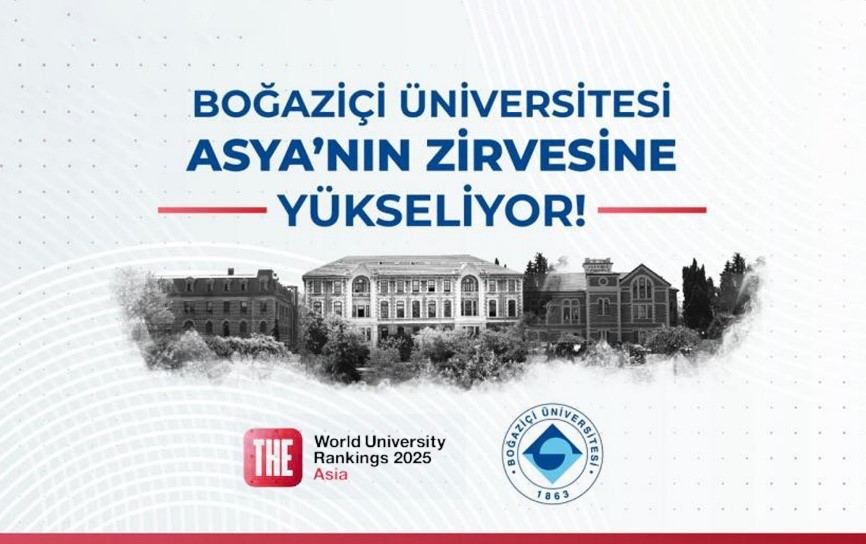
Boğaziçi University Rises to the Top of Asia
Boğaziçi University has risen 18 places in the 2025 Times Higher Education (THE) Asia University Rankings, securing 123rd position. Our university, which was ranked 141st last year, has significantly strengthened its position in the rankings, moving from the top 27% to the top 15% compared to five years ago.
This achievement highlights the growing strength of Boğaziçi University's academic performance, research quality, and international collaborations. International projects and multilingual scientific publications in the fields of engineering, natural sciences, social sciences, and humanities are the main factors contributing to the university's increased global visibility.
The Times Higher Education rankings evaluate universities based on criteria such as teaching quality, research impact, international visibility, and industry collaboration. Within the growing competition in the Asia region, Boğaziçi University's rise is receiving widespread recognition.
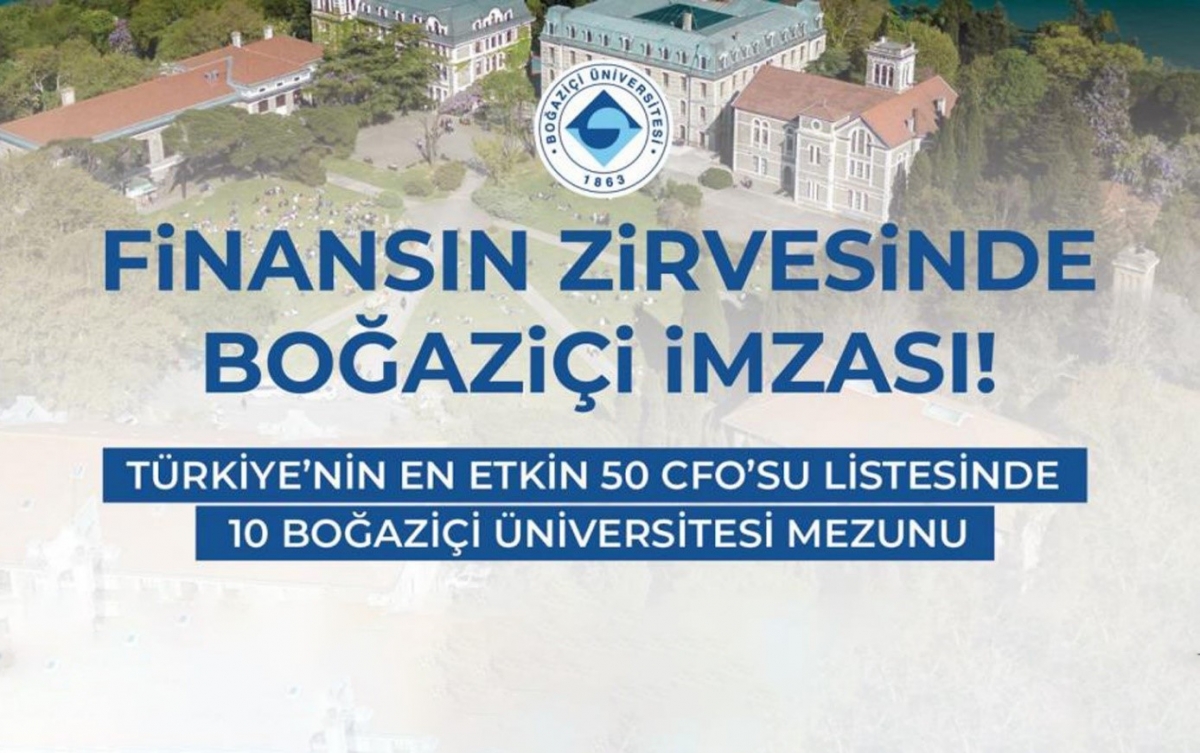
Boğaziçi University Makes Its Mark at the Top of the Financial World
In a study identifying Turkey's leading financial leaders, Boğaziçi University graduates achieved significant success. Ten Boğaziçi University graduates were included in the ‘Turkey's 50 Most Effective CFOs’ list prepared by BMI Business School of Management in collaboration with DataExpert.
Our graduates, who play critical roles in the strategic financial management of their organisations in various sectors such as energy, manufacturing, finance and technology, demonstrate the reflection of our university's strong academic infrastructure and global vision in the business world.
Boğaziçi graduates on the list:
- Bora Çermikli
- Burcu Batı
- Burcu Geriş
- Gül Ertuğ
- Güneş Soytürk
- Haluk Alperat
- Harun Ülgen
- Mahmut Kayacık
- Osman Yılmaz
- Özlem Yeşildere
As Boğaziçi University, we are proud of the success of our graduates in the business world and hope that their achievements will inspire future leaders.
For more details, click here.
https://haberler.bogazici.edu.tr/tr/news/kampus/2/finans-dunyasinin-zirvesinde-bogazici-imzasi/2898
Boğaziçi University Continues Its Rise in Global Rankings
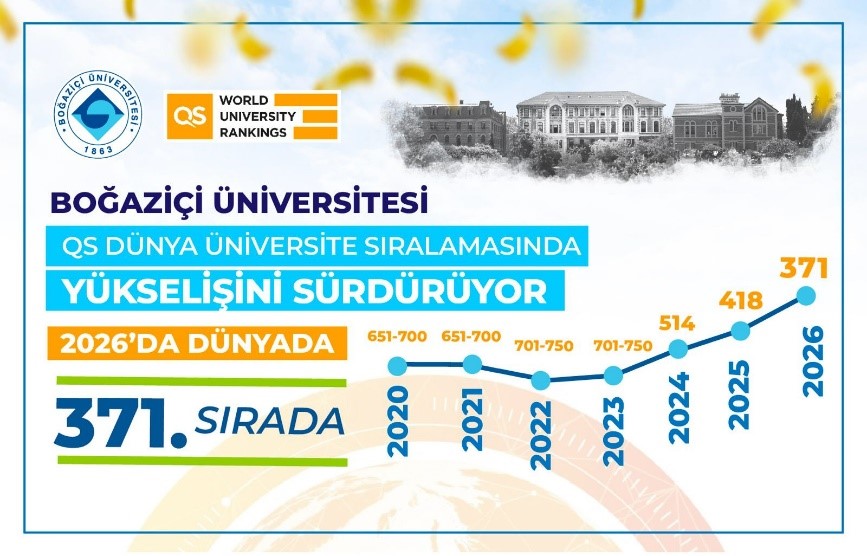
Boğaziçi University has climbed 47 places in the QS World University Rankings 2026, securing the 371st position globally. The university, which has achieved its highest ranking since 2012, moved from the 701-750 band in 2023 to 514th in 2024, 418th in 2025, and 371st in 2026.
The university's overall score increased from 28.5 to 40.3, while it ranked 335th in academic reputation and 88th in employer reputation, entering the top two in Turkey. Thanks to the success of its graduates in the labour market, it ranked first in Turkey in the ‘Employment Outcomes’ category. In addition, the citation score per faculty member increased from 10.7 to 23.7, and the university ranked second in Turkey in terms of sustainability.
This achievement is a testament to the international recognition of Boğaziçi University's academic quality, scientific visibility, institutional reputation, and sustainability-focused vision.
The university will continue to enhance scientific production, develop international collaborations, and create new academic models based on sustainability through its flexible and innovative structure.
2024 Sustainability Report SDG-17 (Related Section)
Meaningful Education Commitment for the SDGs
Boğaziçi University aims to provide a meaningful education to all students throughout the university by integrating the Sustainable Development Goals (SDGs) into social, environmental and academic practices. By integrating the SDGs into education, it is aimed that students understand their global responsibilities and gain a perspective towards finding solutions to sustainability problems. Information on the organisations and activities towards this commitment is given below.
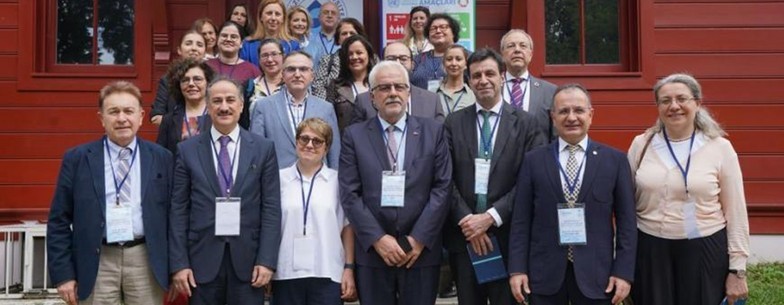
1. UN SDSN Turkey Members Board Meeting
Prof. Dr. Mehmet Naci İnci, Rector of Boğaziçi University, emphasised that higher education institutions have an important responsibility in achieving the Sustainable Development Goals (SDGs) at the UN SDSN Turkey Members Board Meetingheld at our university on 14 June 2023. Prof. Dr. İnci stated that universities should rapidly update their education programmes taking into account the increasing SDG-oriented education demands. In addition, he stated that universities should be sustainability champions not only to look better in the indices, but also to be sustainability champions with joint studies that will benefit the society, environment and economy.
Click here to read the related news:
2. UE4SD Project
Boğaziçi University represented Turkey in the University Educators for Sustainable Development (UE4SD) project, which brought together 55 partners from 33 countries in Europe between 2014-2016. Within the scope of this project, opportunities were provided for university educators to develop their professional competences and academic leadership capacities related to sustainable development education. It also aimed to identify teaching approaches to guide students' understanding and implementation of their global and professional responsibilities in sustainability. As a result of the project, an online resource platform was created as the first compilation of materials for university educators and awareness on the importance of sustainable development in higher education was raised. The stakeholders of the project support the ‘Education Academy for Sustainable Development in Higher Education’.
Click here for more information:
https://haberler.bogazici.edu.tr/tr/news/akademik/1/bogazici-universitesi-turkiyeyi-avrupada-tems/95
https://www.ue4sd.eu/images/PRs/PR4/PR4_trk.pdf
https://www.ue4sd.eu/images/PRs/PR5/PR5_trk.pdf
3. Sustainable Green Campus Practices Commission
Boğaziçi University carries out meaningful studies on issues such as raising environmental awareness, improving energy and natural resource management, reducing emissions and waste generation with the ‘Sustainable Green Campus Practices Commission ’ established in 2014. The aim of this commission is to create an exemplary green campus life by supporting the understanding of environmental and social sustainability throughout the university and integrating it into educational programmes.
Click here for more information:
https://bogazici.edu.tr/tr_TR/Content/Kampus_Yasami/KampusYesilKampus
https://yesilkampus.bogazici.edu.tr/
4. Peace Education Application and Research Centre
Boğaziçi University aims to promote the understanding and culture of peaceful solutions through the Peace Education Research and Application Centre, the first and only peace education centre established under the roof of a university in Turkey. Founded in 2007, this centre aims to combat discrimination and eliminate the concept of ‘other’ by integrating peace education into university programmes.

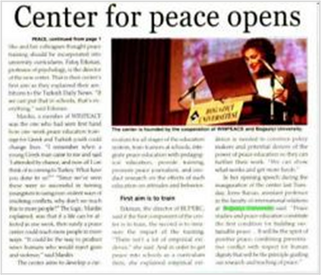
Click here for more information:
https://peaceedu.bogazici.edu.tr/tr
https://haberler.bogazici.edu.tr/tr/news/kampus/2/baris-egitimi-uzun-bir-maraton/40
5. ‘SDSN Youth Turkey’ and Sustainability Festivals
SDSN Youth Turkey, led by Boğaziçi University, organises ‘Sustainability Festivals’ at universities in order to explain the concept of sustainability in an interactive way. These festivals are designed to raise awareness about sustainable development among students and young people and provide a meaningful educational process.
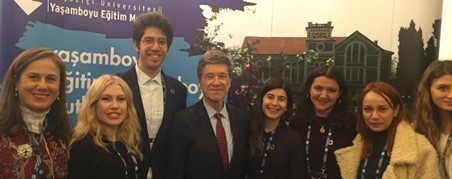
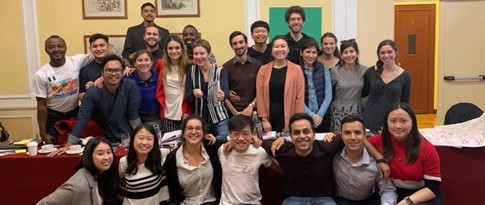
Click here for more information:
https://www.sdsnyouth.org/networks/turkey
https://sdcpc.bogazici.edu.tr/tr/news-02.asp
BOĞAZİÇİ UNIVERSITY
Report on Courses Offered on Environmental Sustainability and Climate Science
This report documents the courses taught at Boğaziçi University that address the topics of environmental sustainability and climate science. The report has been prepared to serve as supporting evidence for ranking applications that require a documented overview of institutional sustainability reporting, United Nations Sustainable Development Goals (SDG) reporting, and teaching activities related to the environment and climate.
The report covers three consecutive academic terms: the Autumn and Spring terms of the 2025/2026 academic year and the Autumn term of the 2026/2027 academic year, and specifies the terms in which each course was actually taught. The accompanying workbook, entitled ‘List of Courses on Environmental Sustainability and Climate Science’, contains the full set of records and the summary tables included herein.
A total of 59 different courses related to this theme have been identified: 37 are compulsory, 18 are related, and 4 are programme components. These account for a total of 577 ECTS credits. Course provision remained stable throughout the reporting period; between 35 and 38 courses were offered in each of the three terms.
Table 1. Thematic courses by academic term
|
Academic term |
Compulsory |
Related |
Programme component |
Total |
Total ECTS |
|---|---|---|---|---|---|
|
2025/2026-1 |
22 |
10 |
4 |
36 |
405 |
|
2025/2026-2 |
24 |
7 |
4 |
35 |
409 |
|
2026/2027-1 |
24 |
10 |
4 |
38 |
420 |
|
Unique courses (excluding repeats) |
37 |
18 |
4 |
59 |
577 |
A course offered in more than one term is counted once in the deduplicated row and once for each term in the rows above it.
Table 2. Thematic courses by faculty and institute
|
Faculty / Institute |
2025/2026-1 |
2025/2026-2 |
2026/2027-1 |
Specialised courses |
|---|---|---|---|---|
|
Institute of Environmental Sciences |
23 |
27 |
24 |
36 |
|
Faculty of Engineering |
7 |
4 |
8 |
11 |
|
Graduate School of Science and Engineering |
2 |
2 |
3 |
6 |
|
Graduate School of Social Sciences |
3 |
2 |
2 |
5 |
|
Faculty of Science |
1 |
0 |
1 |
1 |
|
Total |
36 |
35 |
38 |
59 |
Table 3. Thematic subjects by level of education
|
Level of education |
2025/2026-1 |
2025/2026-2 |
2026/2027-1 |
Specialist courses |
|---|---|---|---|---|
|
Undergraduate |
8 |
4 |
9 |
12 |
|
Master’s degree |
26 |
27 |
26 |
43 |
|
PhD |
2 |
4 |
3 |
4 |
|
Total |
36 |
35 |
38 |
59 |
Table 4. Thematic lessons by sub-theme
|
Sub-theme |
Unique courses |
|---|---|
|
Sustainability management and policy |
8 |
|
Water and environmental quality |
7 |
|
Ecology and biodiversity |
6 |
|
Energy transition and renewable energy sources |
5 |
|
Programme component |
4 |
|
Environment and ecological economics |
3 |
|
Fundamentals of Environmental Science |
3 |
|
Green technology and the transition process |
3 |
|
Climate Science and Earth Systems |
2 |
|
Climate Science and Policy |
2 |
|
Energy infrastructure |
2 |
|
Environment and health |
2 |
|
Environmental chemistry |
2 |
|
Environmental modelling and data |
2 |
|
Climate adaptation and coastal systems |
1 |
|
Climate science and the atmosphere |
1 |
|
Ecology and society |
1 |
|
Energy and resource efficiency |
1 |
|
Energy storage |
1 |
|
Environmental safety and risk |
1 |
|
Sustainable built environment |
1 |
|
Sustainable mobility |
1 |
Each module is assigned a single sub-theme selected to reflect its main topic.
Course list
The table below lists all courses identified under the relevant theme, grouped by the departments in which they are taught. A tick indicates that the course is offered in the relevant term.
Table 5. Courses on environmental sustainability and climate science, by department
|
Code |
Course title |
Level |
ECTS |
Sub-theme |
2025/2026-1 |
2025/2026-2 |
2026/2027-1 |
Related |
|---|---|---|---|---|---|---|---|---|
|
Institute of Environmental Sciences — Environmental Sciences |
||||||||
|
ESC 301 |
ENVIRONMENTAL DIMENSION |
Master’s Degree |
6 |
Fundamentals of Environmental Science |
● |
● |
● |
Core |
|
ESC 305 |
GLOBAL CLIMATE CHANGE |
Master’s Degree |
6 |
Climate Science and Policy |
● |
● |
● |
Core |
|
ESC 306 |
EVOLUTION |
Master’s Degree |
6 |
Ecology and Biodiversity |
|
● |
|
Related |
|
ESC 307 |
SOCIAL ECOLOGY |
Master’s Degree |
6 |
Ecology and Society |
● |
● |
● |
Core |
|
ESC 315 |
MICROORGANISMS |
Master’s Degree |
6 |
Ecology and Biodiversity |
● |
● |
● |
Related |
|
ESC 351 |
SUSTAINABLE DEVELOPMENT |
Master’s Degree |
6 |
Sustainability management and policy |
● |
● |
● |
Core |
|
ESC 505 |
PUBLIC HEALTH AND ENVIRONMENT |
Master’s Degree |
8 |
Environment and Health |
|
● |
● |
Core |
|
ESC 509 |
RESOURCE CONSERVATION FOR ENERGY, FUELS AND CHEMICALS |
Master’s Degree |
8 |
Energy and resource efficiency |
● |
|
● |
Core |
|
ESC 510 |
GROUNDWATER FLOW AND POLLUTANT TRANSPORT |
Master’s Degree |
8 |
Water and environmental quality |
|
● |
|
Core |
|
ESC 520 |
FUNDAMENTALS OF ENVIRONMENTAL SCIENCES |
Master’s Degree |
8 |
Fundamentals of Environmental Science |
● |
|
● |
Core |
|
ESC 527 |
ENVIRONMENTAL MODELLING |
Master’s Degree |
8 |
Environmental modelling and data |
● |
|
● |
Core |
|
ESC 528 |
DRINKING WATER DISINFECTION |
Master’s Degree |
8 |
Water and environmental quality |
● |
● |
● |
Core |
|
ESC 530 |
RESEARCH METHODS FOR ENVIRONMENTAL SCIENCE SPECIALISTS |
Master’s Degree |
8 |
Fundamentals of Environmental Science |
|
● |
|
Core |
|
ESC 539 |
ENVIRONMENTAL GOVERNANCE |
Master’s Degree |
8 |
Sustainability management and policy |
● |
|
● |
Core |
|
ESC 541 |
ENVIRONMENTAL ECONOMICS |
Master’s Degree |
8 |
Environmental and Ecological Economics |
● |
|
● |
Core |
|
ESC 542 |
ECOLOGICAL ECONOMICS |
Master’s Degree |
8 |
Environmental and Ecological Economics |
|
● |
|
Core |
|
ESC 549 |
CLIMATE CHANGE POLICY |
Master’s Degree |
8 |
Climate Science and Policy |
|
● |
|
Core |
|
ESC 550 |
INSTRUMENTAL METHODS IN ENVIRONMENTAL ANALYSIS |
Master’s Degree |
8 |
Water and environmental quality |
|
● |
|
Core |
|
ESC 551 |
ENVIRONMENTAL CHEMISTRY |
Master’s Degree |
8 |
Environmental Chemistry |
● |
● |
● |
Core |
|
ESC 554 |
Bioenergy and Biofuels |
Master’s Degree |
8 |
Energy transition and renewable energy sources |
|
● |
|
Core |
|
ESC 557 |
ENVIRONMENTAL MICROBIOLOGY |
Master’s Degree |
8 |
Ecology and Biodiversity |
● |
● |
● |
Core |
|
ESC 558 |
CONCEPTS AND MODELS IN ECOLOGY |
Master’s Degree |
8 |
Ecology and Biodiversity |
● |
● |
● |
Core |
|
ESC 559 |
MOLECULAR ECOLOGY AND EVOLUTION |
Master’s Degree |
8 |
Ecology and Biodiversity |
● |
|
● |
Core |
|
ESC 569 |
MICROBIAL BIOTRANSFORMATION AND GENETICS |
Master’s Degree |
8 |
Ecology and Biodiversity |
|
● |
|
Related |
|
ESC 572 |
GLOBAL ENVIRONMENTAL SYSTEMS |
Master’s Degree |
8 |
Climate Science and Earth Systems |
● |
● |
● |
Core |
|
ESC 577 |
DYNAMIC MODELLING OF SOCIO-ECOLOGICAL SYSTEMS |
Master’s Degree |
8 |
Environmental modelling and data |
● |
|
● |
Core |
|
ESC 578 |
SYSTEMS AND SUSTAINABILITY |
Master’s Degree |
8 |
Sustainability management and policy |
|
● |
|
Core |
|
ESC 579 |
MASTER’S SEMINAR |
Master’s Degree |
2 |
Programme component |
● |
● |
● |
Programme component |
|
ESC 594 |
SPECIAL TOPICS: GREEN TRANSITION IN INDUSTRY |
Master’s Degree |
8 |
Green technology and transition |
● |
● |
|
Core |
|
ESC 595 |
SPECIAL TOPICS: DATA SCIENCE FOR WATER RESOURCES |
Master’s Degree |
8 |
Water and environmental quality |
|
● |
|
Core |
|
ESC 59Y |
SPECIAL TOPICS: ENVIRONMENTAL ASSESSMENT AND COST-BENEFIT ANALYSIS |
Master’s Degree |
8 |
Environmental and Ecological Economics |
● |
|
|
Core |
|
ESC 651 |
ENVIRONMENTAL TOXICOLOGY |
PhD |
8 |
Environment and Health |
|
● |
● |
Core |
|
ESC 653 |
ATMOSPHERIC CHEMISTRY |
Master’s Degree |
8 |
Climate Science and the Atmosphere |
|
|
● |
Core |
|
ESC 690 |
Master’s Thesis |
Master’s Degree |
60 |
Programme component |
● |
● |
● |
Programme component |
|
ESC 700 |
MASTER’S SEMINAR |
PhD |
2 |
Programme component |
● |
● |
● |
Programme component |
|
ESC 790 |
PhD Thesis |
PhD |
120 |
Programme component |
● |
● |
● |
Programme component |
|
Faculty of Engineering — Chemical Engineering |
||||||||
|
CHE 441 |
HYDROGEN TECHNOLOGIES |
Undergraduate |
5 |
Energy transition and renewable energy sources |
|
● |
|
Related |
|
CHE 443 |
RENEWABLE ENERGY TECHNOLOGIES |
Undergraduate |
5 |
Energy transition and renewable energy sources |
● |
|
● |
Core |
|
CHE 465 |
OPERATIONS AND ENVIRONMENTAL SAFETY IN CHEMICAL PLANTS |
Undergraduate |
5 |
Environmental safety and risk |
● |
|
● |
Related |
|
Faculty of Engineering — Civil Engineering |
||||||||
|
CE 231 |
EARTH SCIENCES |
Undergraduate |
5 |
Climate Science and Earth Systems |
● |
|
● |
Related |
|
CE 315 |
HYDRAULIC ENGINEERING I |
Undergraduate |
6 |
Water and environmental quality |
● |
|
● |
Related |
|
CE 322 |
SUSTAINABILITY IN CIVIL ENGINEERING |
Undergraduate |
5 |
Sustainable built environment |
|
● |
|
Core |
|
CE 414 |
COASTAL ENGINEERING |
Undergraduate |
5 |
Climate Adaptation and Coastal Systems |
● |
|
● |
Related |
|
CE 422 |
ENVIRONMENTAL ENGINEERING DESIGN |
Undergraduate |
5 |
Water and environmental quality |
● |
● |
● |
Core |
|
CE 482 |
SP.TP: MICROMOBILITY |
Undergraduate |
6 |
Sustainable mobility |
|
● |
|
Related |
|
CE 48C |
SPECIAL TOPICS: PLANNING AND DESIGN OF ENERGY FACILITIES |
Undergraduate |
5 |
Energy infrastructure |
● |
|
● |
Related |
|
CE 48V |
SPECIAL TOPICS: WATER RESOURCES, SYSTEM ANALYSIS AND SMART DECISION SUPPORT |
Undergraduate |
6 |
Water and environmental quality |
|
|
● |
Core |
|
Graduate School of Science and Engineering — Chemical Engineering |
||||||||
|
CHE 542 |
ANALYSIS OF SUSTAINABLE TECHNOLOGIES |
Master’s Degree |
8 |
Green technology and transition |
|
● |
|
Core |
|
CHE 543 |
CATALYSIS FOR GREEN TECHNOLOGIES |
Master’s Degree |
8 |
Green technology and transition |
● |
|
● |
Core |
|
CHE 581 |
SPECIAL TOPICS: SUPERCAPACITOR TECHNOLOGIES |
Master’s Degree |
8 |
Energy storage |
|
|
● |
Related |
|
Institute of Science and Engineering — Chemistry |
||||||||
|
CHEM528 |
ENERGY SOURCES |
Master’s Degree |
8 |
Energy transition and renewable energy sources |
|
|
● |
Related |
|
CHEM596 |
SPECIAL TOPICS: ALTERNATIVE ENERGY SOURCES OF THE FUTURE |
Master’s Degree |
8 |
Energy transition and renewable energy sources |
● |
|
|
Related |
|
Institute of Science and Engineering — Civil Engineering |
||||||||
|
CE 681 |
SPECIAL TOPICS: FUNDAMENTALS OF ENERGY GEOTECHNICS AND THERMOACTIVE GEOSTRUCTURES |
PhD |
10 |
Energy infrastructure |
|
● |
|
Related |
|
Graduate School of Social Sciences — Sustainable Tourism Management |
||||||||
|
TRM 521 |
DESTINATION DEVELOPMENT FOR SUSTAINABLE TOURISM |
Master’s Degree |
7 |
Sustainability management and policy |
● |
|
● |
Related |
|
TRM 522 |
ENVIRONMENT, SUSTAINABILITY AND TOURISM |
Master’s Degree |
7 |
Sustainability management and policy |
|
● |
|
Core |
|
TRM 525 |
SUSTAINABLE BUSINESS DEVELOPMENT |
Master’s Degree |
7 |
Sustainability management and policy |
● |
|
● |
Related |
|
TRM 526 |
CORPORATE SOCIAL RESPONSIBILITY AND GOVERNANCE |
Master’s Degree |
7 |
Sustainability management and policy |
● |
|
|
Related |
|
TRM 543 |
ALTERNATIVE FORMS OF TOURISM |
Master’s Degree |
7 |
Sustainability management and policy |
|
● |
|
Related |
|
Faculty of Science — Chemistry |
||||||||
|
CHEM471 |
ENVIRONMENTAL CHEMISTRY |
Undergraduate |
6 |
Environmental Chemistry |
● |
|
● |
Core |
Course titles have been reproduced as they appear in the institution’s catalogue. ● = a course offered during that term.
