


17.4.4 Sustainability literacy measurement
Green Campus Sustainability Literacy Survey
Boğaziçi University, within the scope of the European Union project ‘Students Calling!
Be a Partner in Action’ project, Boğaziçi University has carried out various activities to raise awareness among young people. Thanks to the ‘University Educators for Sustainable Development (UE4SD)’ project, supported by the Erasmus Academic Network of the European Commission and completed in 2017, students' awareness of sustainable environment has improved. In this direction, studies to raise awareness on sustainable production and consumption issues were supported by surveys.
In order to understand the perception of sustainability on campus and students' expectations, a comprehensive survey was conducted among a large group of students from all disciplines, academic levels and with different career goals. With this survey, students' awareness and expectations on academic and social sustainability, campus sustainability criteria, waste management, carbon footprint and energy management were investigated.
The prominent topics from the survey results are as follows:
- Environmental sustainability has the highest priority, followed by social, good governance and economic sustainability.
- The group with the highest sustainability awareness is students, followed by faculty members, administration and campus staff.
- 73.6% of the respondents are aware that there are one or more green buildings on campus.
- 67.7% of the responses indicate high student interest in further sustainability research and projects.
- Most respondents think that social media and digital communication channels should be used more effectively to disseminate sustainability information.
- 75.7% of the respondents are aware that sustainable energy sources are used on campus.
- Regarding waste management, students find the availability of waste sorting bins and raising recycling awareness equally important.
- Students prefer refilling printer cartridges and recycling paper, plastic and glass waste.
These findings reveal that students demand more transparency on sustainability issues, sustainable management practices and an effective sustainability communication strategy. Students also want steps to be taken to increase the interest of their peers in academic research on sustainability issues.
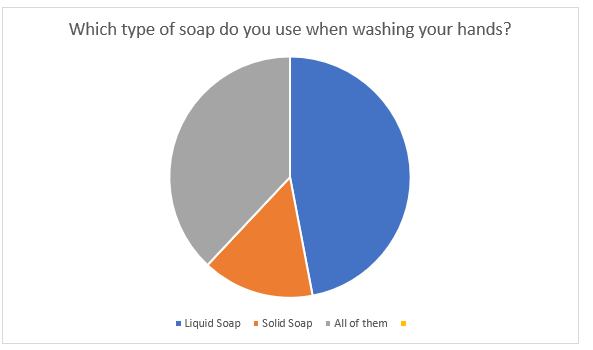
The personal care product usage habits of students, especially those living in dormitories, are evaluated through semester-based surveys conducted regularly every year and the results are reported. According to the survey, 47% of the students prefer liquid soap when washing their hands, 15% use solid soap, and 38% prefer both products. Students living in dormitories usually spend half of the day in their rooms and 41 per cent wash their hands every two hours. Most of those who use liquid soap use it by pressing the soap pump at least twice. There are also students who use solid soap for both hand washing and bathing. In addition, 91 per cent of the students living in the dormitory use shower gel.
Assessing Carbon Footprint in the Context of Students' Transportation to School:
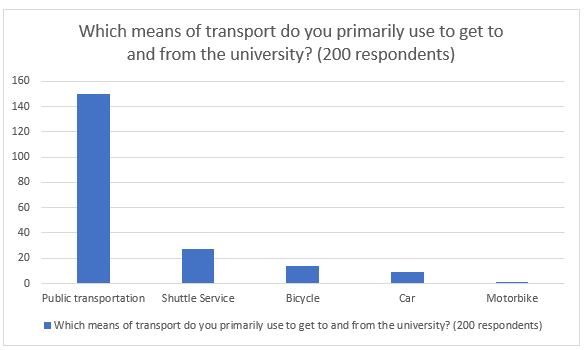
In the Spring semester of, more than 200 students participated in the survey conducted at Boğaziçi University to assess the common modes of transport and carbon footprints of students. According to the survey results, the majority of students use public transport, with metro being the most preferred mode of transport. This finding shows that students' transport preferences contribute significantly to the reduction of carbon emissions.
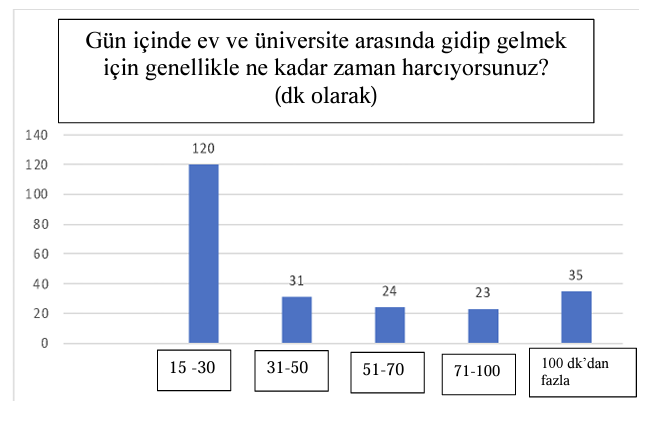
According to the results, a significant number of students commute to school on more than one day, usually for 15-30 minutes during the day.
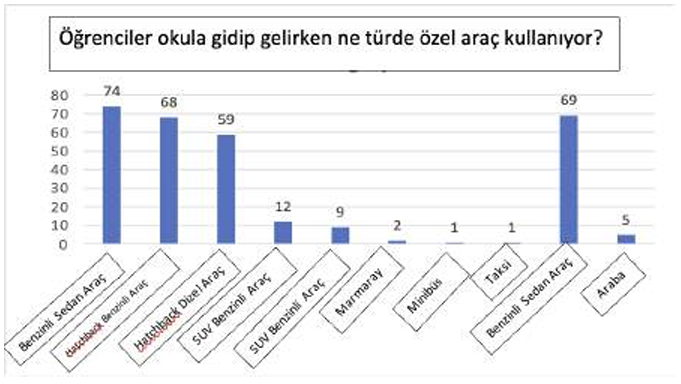
The majority of students who use private vehicles to reach school prefer sustainable vehicle types. This conscious attitude that prioritises environmentally friendly options is a reflection of their efforts to minimise their individual carbon footprints. Students who prefer both sustainable means of transport and environmentally friendly modes of transport to school make a significant contribution to reducing carbon emissions. This joint effort creates a positive impact by strengthening a sustainable ecosystem.
Spring Term -Green Campus Survey Evaluation
Boğaziçi University continues its green campus practices aiming to be recognised as an ‘exemplary sustainable university campus’ in national and international platforms with various education and training practices in terms of environmental and social sustainability. Various surveys are organised to raise student awareness on this issue. In this context, the ‘Green Campus Survey’ includes comprehensive questions to understand students' awareness of sustainability both on campus and in their daily lives and the habits they adopt in line with this awareness.
242 students from different departments taking the course ‘ESC 351 Sustainable Development’ participated in the survey conducted in the spring semester of. In one part of the questionnaire, students' motivations for attending the “ESC 351 - Sustainable Development” course offered by the Institute of Environmental Sciences were questioned. When the responses were analysed, it was seen that the majority of the students were aware of the vital importance of sustainability today and aimed to acquire basic knowledge in order to show sensitivity to future problems and to produce solutions to environmental problems.
Many students stated that they wanted to ‘gain insight and knowledge about the subject by taking this course and to apply the knowledge they gained while shaping their personal lives and careers’.
Do you consider yourself to have sufficient awareness and consciousness about environmental problems?
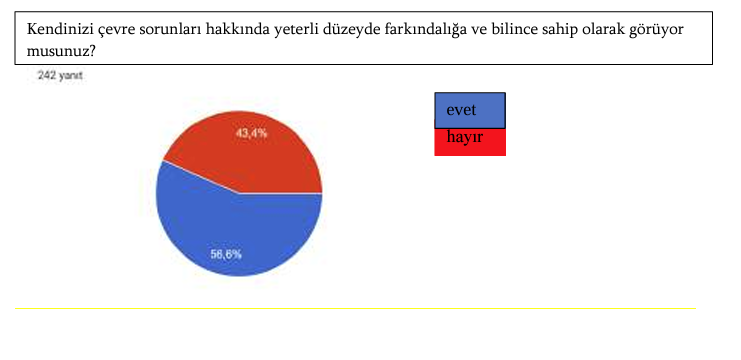
Within the scope of the questionnaire, students were asked whether they consider themselves as a sufficiently conscious individual in terms of their awareness of environmental problems. To this question, 56.6% of the students answered ‘yes’, while 43.4% answered ‘no’.
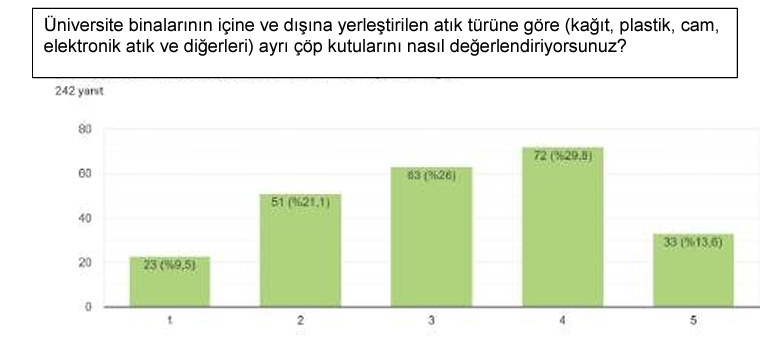
As can be seen in the figure, most of the students who were expected to score over 5 points chose 4. ‘3’ is followed by “4” which is the most selected score. Based on this information, it can be concluded that most of the students who participated in the survey consider the separate bins according to waste types inside the university buildings and on the campuses to be at a good level.
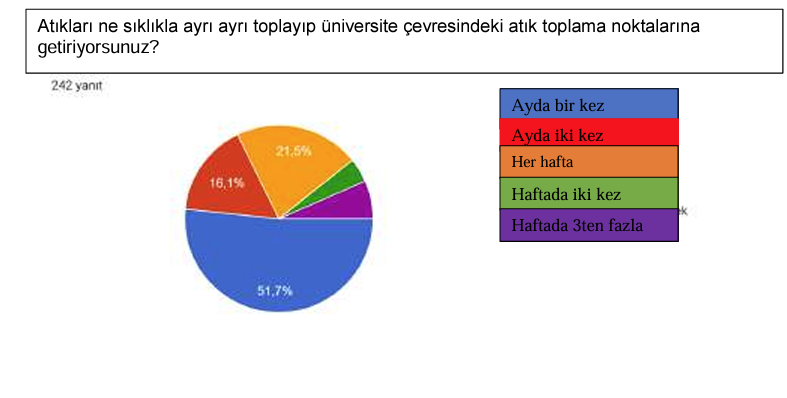
To the question asked to find out how often students sort and dispose of the waste generated in their campus life to waste points on and around the campus, 51.7% of the students answered once a month.
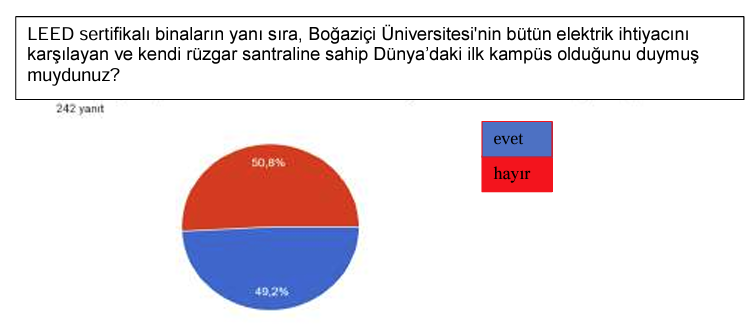
To the question asked to examine whether students are aware of the sustainable green campus achievements of our university, 50.8% of the students answered ‘no’, while 49.2% of the students answered ‘yes’. In our school, where sustainable green campus practices and studies continue in various fields, it is important to announce the achievements of our university and raise awareness on this issue by continuing surveys such as the Green Campus Survey, various seminars and trainings.
In one part of the questionnaire, students were asked about their habits in daily life and whether they consider sustainability-based criteria in their product purchases.
The Green Campus Survey, which was prepared to examine sustainability awareness and its integration into daily habits at Boğaziçi University, was answered by 242 students in total. The results revealed that the majority of students are individuals with high sustainability and environmental awareness in their on-campus and off-campus lives. The survey results show that students shape their habits in line with this awareness and their motivation to learn about sustainability is strong.
The majority of the respondents are students studying in different departments other than the Institute of Environmental Sciences. This situation is important in terms of the fact that the high participation in environmental science courses from outside the field shows that the interest in sustainability is broad-based. The fact that the Institute of Environmental Sciences offers courses open to all students enables students from different departments to take these courses, and the high awareness and motivation measured by the surveys are considered as an important success for our university.
2024 Sustainability Report SDG-17 (Related Section)
Assessment of Students' Sustainability Literacy
UE4SD Project Survey Evaluation
The ‘University Educators for Sustainable Development (UE4SD)’ project, supported by the Erasmus Academic Network of the European Commission and completed in 2017, increased the sustainable environmental awareness of students. After the project, sustainable production and consumption studies were expanded with surveys. In the context of campus sustainability, a comprehensive questionnaire was administered to students from different disciplines and levels on academic and social sustainability, waste management, carbon footprint and energy management to understand students' awareness and expectations.
The prominent results of the survey results are as follows:
- Environmental Sustainability has the highest priority, followed by social, good governance and economic sustainability.
- Among all groups, students have the highest level of sustainability awareness, followed by faculty, administration and campus staff.
- 73.6% of the respondents are aware that there are one or more green buildings on campus.
- 67.7 per cent of the responses indicated that student interest in more sustainability research and projects is a top priority.
- Most respondents think that social media and other digital communication channels should be used more effectively to disseminate sustainability information at the university.
- 75.7% of the respondents are aware that sustainable energy sources are used on campus.
- In terms of waste management, students equally value the availability of waste sorting bins and increased recycling awareness.
- Most students favour refilling and reusing printer cartridges, while recycling is the most popular solution for paper, plastic and glass solid waste.
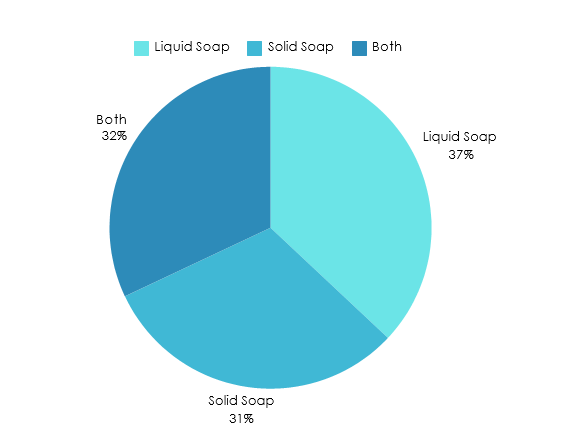
Personal care product consumption habits of the students staying in the dormitory are evaluated through periodical surveys conducted every year. According to the survey conducted in, 37% of the students use liquid soap, 31% use solid soap, and 32% use both. While 41% of the residents wash their hands every 2 hours, those who use liquid soap use the pump at least twice.
Evaluation of Carbon Footprint in the Context of Students' Transportation to School
More than 200 students participated in the survey conducted at Boğaziçi University in the Spring semester of to assess students' common modes of transport and carbon footprints. The survey results revealed that the majority of students prefer public transport, especially the metro. This finding shows that students make a significant contribution to the reduction of carbon emissions through their transport choices.
- "How much time do you typically spend commuting between your home and university each day (in minutes)?"
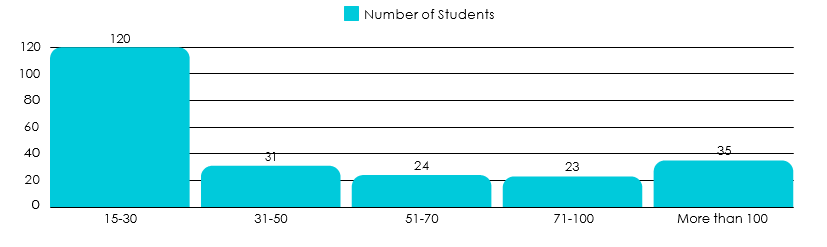
The results show that many students commute to and from school more than once during the day, usually for 15-30 minutes.
- "What type of fuel-powered vehicle do you use when commuting to school?"
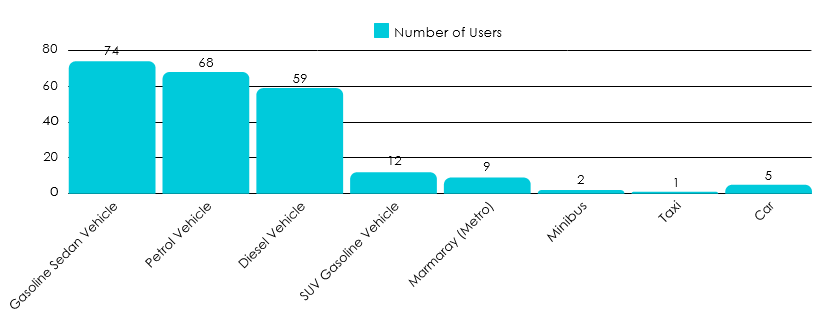
Most of the students travelling to school by private car prefer sustainable vehicle types. This conscious approach that prioritises environmentally friendly options reflects the effort to reduce individual carbon footprint.
Students who choose sustainable and environmentally friendly transport modes contribute significantly to reducing carbon emissions. This collective consciousness creates a positive impact by strengthening a sustainable ecosystem.
Boğaziçi University aims to be an exemplary ‘green campus’ in national and international platforms with its environmentally and socially sustainable education and training practices. In this direction, various surveys are organised to raise student awareness.
The Green Campus Survey, which was conducted in the Spring semester of with the participation of 242 students from different departments taking the ‘ESC 351 Sustainable Development’ course, examined students' awareness of sustainability and how they integrate this awareness into their lives.
In the survey, students' motivations for choosing “ESC 351 Sustainable Development” course were specifically questioned and the main reasons were identified. Most of the students emphasised that sustainability is a vital issue and stated that they chose this course in order to learn basic information about environmental problems, to be sensitive to future problems and to find solutions. In addition, many students stated that they aimed to apply the knowledge they gained to both their personal lives and careers.
- "Do you consider yourself adequately aware and conscious of environmental issues?"
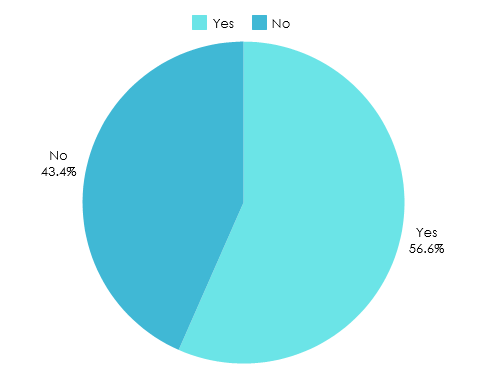
Within the scope of the questionnaire, students were asked whether they consider themselves as a sufficiently conscious individual in terms of their awareness of environmental problems. To this question, 56.6% of the students answered ‘yes’ and 43.4% answered ‘no’.
- "How do you utilize the separate waste bins (paper, plastic, glass, electronic waste, and others) placed inside and outside the university buildings?"
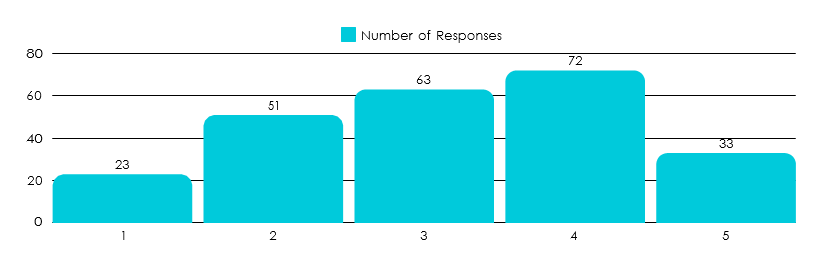
As seen in the figure, when the students were asked to make an evaluation out of 5, the most frequently chosen score was ‘4’. ‘3’ is the most preferred option following the “4” score. According to this, it can be concluded that most of the students who participated in the survey see the waste bins separated according to waste types in university buildings and campuses at a good level.
- "How often do you collect waste separately and bring it to waste collection points around the university?"
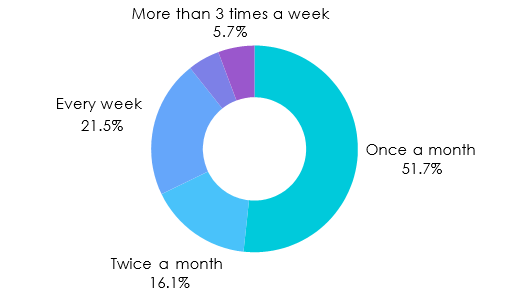
When students were asked how often they sort the waste generated in their campus life and dispose of it at waste points on and around the campus, 51.7% of them answered ‘once a month’.
- "In addition to LEED-certified buildings, have you heard that Boğaziçi University is the first campus in the world to have its own wind power plant that meets all its electricity needs?"
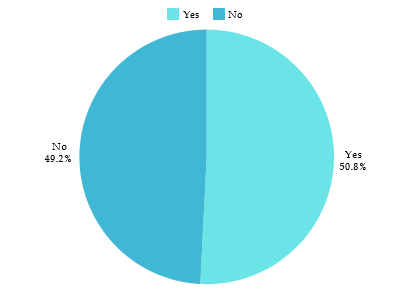
When students were asked whether they were aware of the sustainable green campus achievements of our university, 50.8% of them answered ‘no’ and 49.2% answered ‘yes’. While sustainable green campus practices continue in different areas, it is of great importance to publicise these achievements and raise awareness through various seminars and trainings as well as studies such as the Green Campus Survey.
In one part of the questionnaire, students were asked whether they consider sustainability criteria in their daily habits and product purchases and sales.
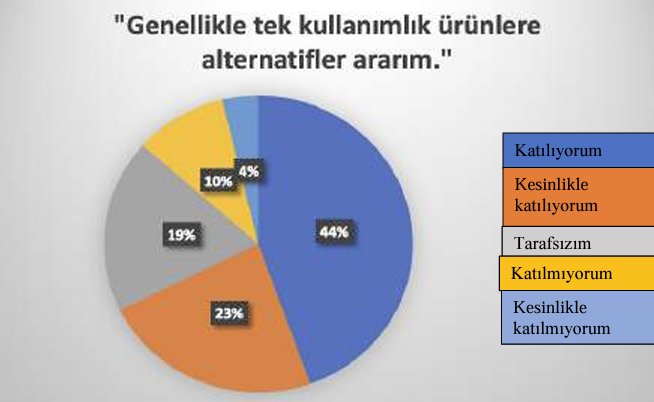
- "I often look for alternatives to disposable products."
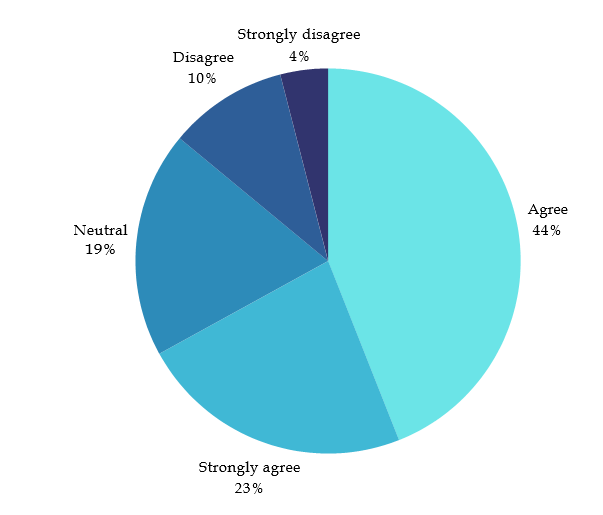
In the questionnaire, students were asked whether they prefer reusable, environmentally friendly alternatives to disposable products in their daily lives. 44% of the participants answered ‘agree’, 23% answered ‘strongly agree’ and stated that they generally prefer alternative products. This result reveals the sensitivity of the majority of students to environmental problems and their awareness of sustainability.
- "I sort my household waste according to its type (plastic, glass, paper, etc.)."
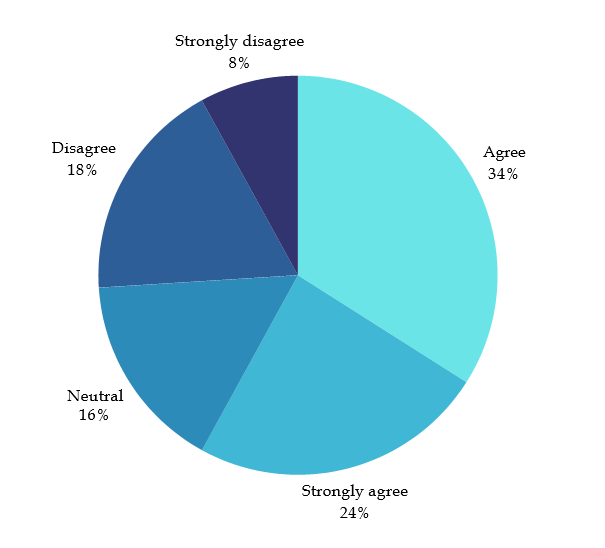
In the questionnaire, students were asked whether they sorted their wastes at home according to their types. 34% of the participants answered ‘agree’ and 24% answered ‘strongly agree’, indicating that they segregate their waste. This result shows that students attach importance to waste separation not only in campus life but also at home and are conscious about environmental and sustainability issues.
- "I carry a reusable water bottle, thermos, cutlery and/or straws."
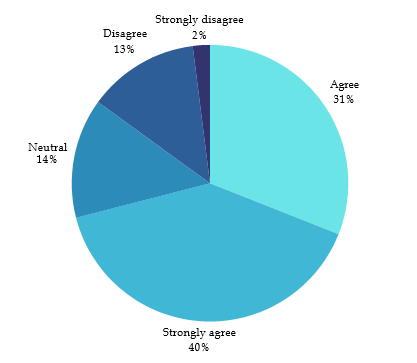
In the questionnaire, students' habits of using reusable products in their daily lives were questioned. 40% of the participants answered ‘strongly agree’, 31% answered ‘agree’ and stated that they use and carry reusable products with them. This result shows that most of the students have a significant awareness of sustainability and adopt environmentally friendly habits.
The Green Campus Survey, which was organised to examine the sustainability awareness of students at Boğaziçi University and the extent to which they integrate this awareness into their daily habits, was conducted with the participation of 242 students. The reasons why students from different departments chose the course ‘ESC 351 Sustainable Development’ and the results obtained are quite valuable. It has been observed that most of the students have sustainability awareness both on and off campus and reflect this awareness to their habits. It is an important achievement for our university to determine that students' awareness and motivation towards sustainability are high with the questionnaires organised.
Click here for more information:
